



'Letting Shinnecock be Shinnecock': How Shinnecock Hills has taken center stage at 126th U.S. Open
5 Min Read
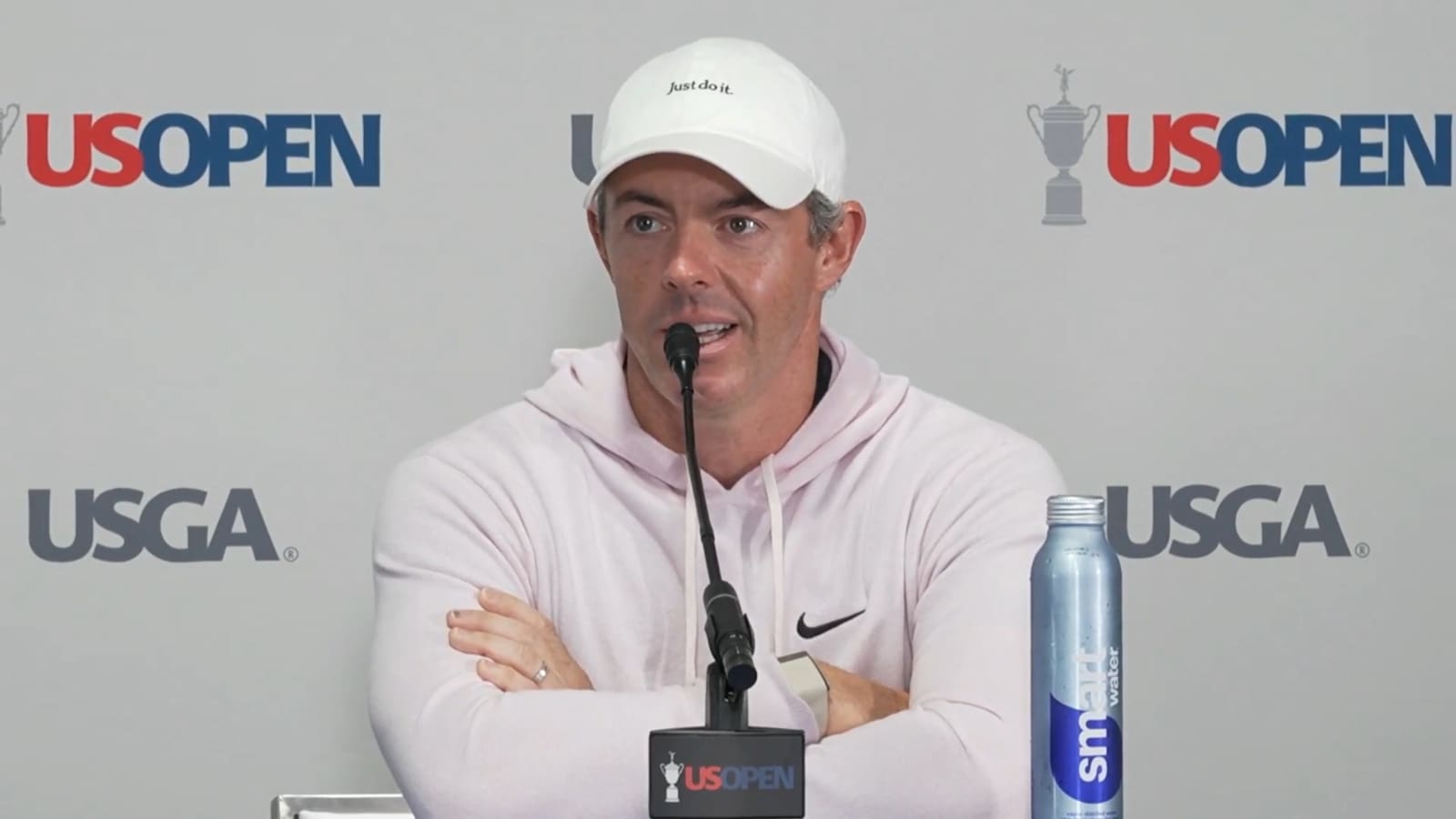
Rory McIlroy on difference between difficult, unfair U.S. Open setups
SOUTHAMPTON, N.Y. — The videos emerged within hours of tournament week starting. Flags roaring in the wind. Rory McIlroy flighting a 6-iron into a 156-yard par 3. Players voicing concerns about the 11th green’s fairness. Worries about “losing” the course again.
This is Shinnecock Hills’ U.S. Open, where the course is as prominent a character as any of the participants. Scottie Scheffler is chasing the career Grand Slam. Rory McIlroy is seeking to become the winningest European in major championship history. Brooks Koepka is back at the venue of his crowning achievement, eager to turn back the clock.
Maybe, later in the week, those storylines will dominate the discourse. But right now, nothing is occupying the minds of the golf world quite like Shinnecock, the famed William Flynn design expertly laid out across a pristine stretch of sandy soil in the Hamptons, as difficult as it is historic.
Will the course produce an over-par finish? Will it tow the right line between incredibly difficult and unfair?
The U.S. Open has a way of centering its story on its host. It is the one time each year that the world roots for the course to win and the players to lose, and no course delivers on that aspiration more than Shinnecock. Only two players across the last two U.S. Opens held at the venue finished under par.
Shinnecock hasn’t avoided controversy, mainly in 2018. Phil Mickelson hit a moving ball as the glassy greens bordered on unplayable. Zach Johnson went on a now-infamous rant. Yet for each of Shinnecock’s critics, there’s a chorus of praise. And with a competitive shot yet to be hit this week, admiration is flowing in and drowning out the dissenters.
“I think it's the best championship test in the country,” McIlroy said Tuesday.
Rory McIlroy on difference between difficult, unfair U.S. Open setups
The secret to Shinnecock isn’t flashy. It doesn’t have the views of Pebble Beach or the dramatic land movement of Augusta National. It doesn’t smack you in the face with shock-and-awe holes like TPC Sawgrass’ 17th or push for ultimate carnage like Oakmont.
What makes Shinnecock a crown jewel of American golf is hard to see and difficult to appreciate, but equally essential to the creation of a great course: its routing.
A course’s routing, in simple terms, is how the collection of holes sequences together. Done well, it maximizes the topographical variety of the land, flows naturally from one hole to the next, keeps pace of play steady and, crucially for Shinnecock, uses the wind to its advantage.
Shinnecock didn’t always exemplify this. The first 40 years of the club’s history were a series of trials and errors. The club was founded in 1894 with 12 holes laid out by Willie Davis. Willie Dunn soon revised the course, adding six more holes to complete the 18, and by 1896, Shinnecock was hosting the second-ever U.S. Open. Members weren’t happy with the scoring that week, so the course was quickly lengthened. Yet that version lasted less than 20 years, as advances in golf ball technology prompted another round of substantive changes, this time by C.B. MacDonald, the architect of Shinnecock’s neighbor, the National Golf Links of America. Yet it wasn’t until 1927, when Philadelphia-based architect William Flynn was brought in to redo the course on new land, that the magic of Shinnecock was unlocked.
To accomplish this, Flynn eschewed the predominant routing strategy of the time, the out-and-back layout (one used next door at National Golf Links of America). Instead, he created a series of triangle-shaped sequences to keep players off balance. A look from above shows that holes No. 4-6, 10-13 and 14-16 form unique triangles that force players to change direction from hole to hole, sometimes within the same hole, which never lets a player comfortably adjust to the wind direction. Whereas an out-and-back routing lets a player settle into the wind direction, Flynn’s triangles never allow comfort. Just as they think they understand its nuance, they change direction and elevation.
In fact, other than the first three holes – which were part of the old MacDonald design – no two holes move in the same direction.
That creates a disorienting effect before you even consider the treachery of the actual hole, though Flynn didn’t design it to be overly penal. Flynn carefully considered the prevailing wind out of the southwest. Most of the longest holes on the property will play downwind, and many of its shortest holes will play into it.
“The routing progression at Shinnecock today is one of the best anywhere,” said Wayne Morrison, golf historian and author of “The Nature Faker,” an extensive biography on Flynn and his designs. “Individually, the holes are great, but in sequence, they are just a marvelous progression.”
The best part? Wind is constant. While other golf courses pray for wind when a tournament comes around, Shinnecock doesn’t need to worry. Its position between Long Island’s Great Peconic Bay and the Atlantic Ocean creates reliable gusty conditions. Winds on Thursday are expected to be around 20 mph, with gusts up to 50 mph.
All that nuance will also allow Shinnecock to be Shinnecock.
That’s the USGA’s overarching edict as it returns for the third time in the last 22 years, a stark shift from how the tournament was presented in 2004 or 2018. Fairway widths will play as they do year-round for members, rather than the narrowed version created in ‘04 and ‘18. Green speeds will run around 10.5 on the Stimpmeter, the slowest of any U.S. Open greens since 1995. That also closely follows Shinnecock’s daily standards and is being done to combat the high wind speeds that are expected. The USGA will also “syringe” greens between the morning and afternoon waves on Thursday and Friday, mirroring the club’s regular agronomic practices of watering the putting surfaces throughout the day to keep them playable and healthy. That should add up to a test that identifies the player who best executes the test Shinnecock and Flynn create.
“Letting Shinnecock be Shinnecock,” Chief Championships Officer John Bodenhammer said Wednesday. “If it isn’t good enough, we shouldn’t come here. And it is.”


