



Scottie Scheffler’s career Grand Slam pursuit begins: Will it torment him, too?
10 Min Read
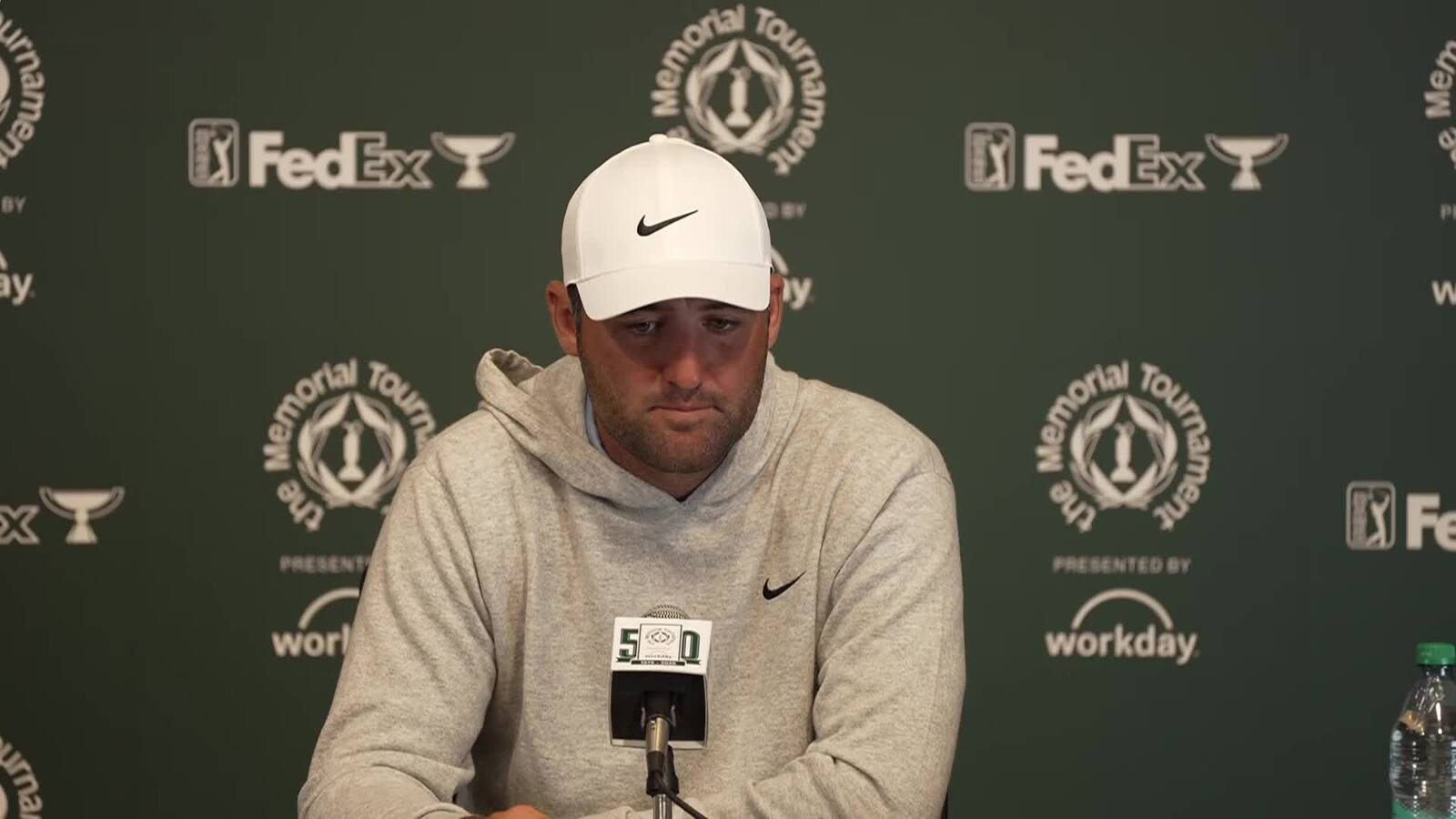
Scottie Scheffler on his mind being one of his biggest strengths
Players in Article
Players in This Article
The tepid hum of the crowd filled the air like white noise against a backdrop of scattered clouds, with the occasional peek of afternoon glow dancing along Muirfield Village’s practice range, warming the surroundings.
The only break from this serenity was a metronomic thud every few moments, as a not-too-pleased golfer took lashes through the turf in search of something only hard work would find.
The day was difficult yet successful. Scottie Scheffler spent this Friday afternoon on the cutline with little control of his ball, a feeling every golfer hates and this particular golfer hasn’t experienced often. He said he felt like he might shoot 90, but the sum of swings added only to 72, and a flurry of late birdies meant this post-round range session would get put to the test the next day.
“That's maybe some of the worst I've hit it in a couple years out there,” Scheffler said after his round.
It was a notable admission in its severity and its timing. This is typically the point of the year that Scheffler is in full flight. The Memorial Tournament presented by Workday, in particular, served as a summit of everything that makes Scheffler’s game immense. His pinpoint ball-striking navigates him around the vaunted design, and his patience outlasts his peers, who can’t help but get frustrated and take ill-timed risks. Yet those were the things that befell Scheffler, and it all carried quite obvious stakes to those watching.
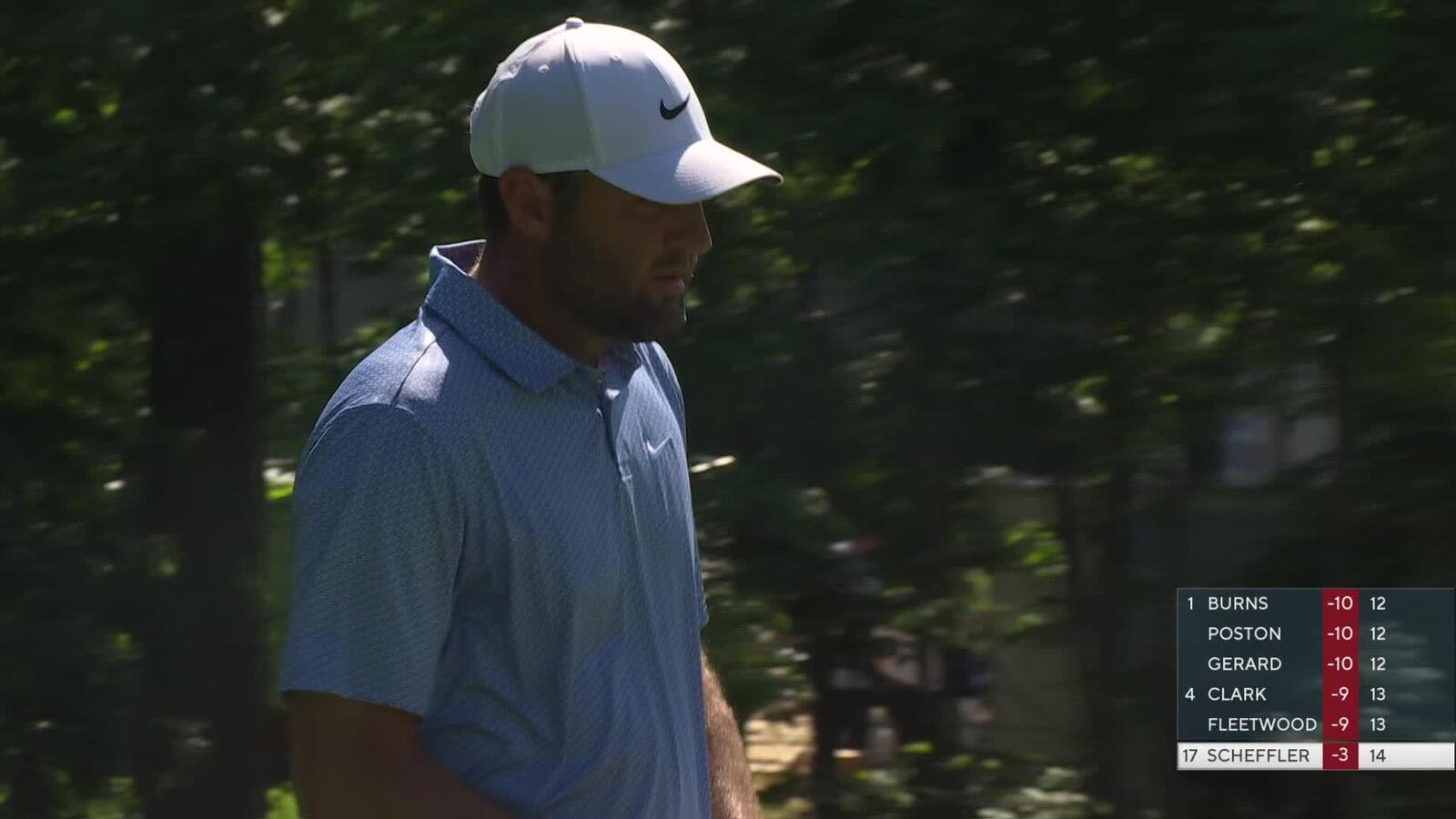
Scottie Scheffler reaches par-5 No. 15 in two, makes birdie at the Memorial
There was a tournament to win that week, yes, but his first two rounds had played him out of it even if he hadn’t admitted it yet. The real question was what lurked ahead, the history at hand that Scheffler has shied away from, and whether he’s ready for it. The subtext Scheffler wouldn’t discuss hung over the press room. A reporter asked a question designed to get at the heart of it without explicitly asking. The U.S. Open was less than two weeks away. Is this good prep, and more implicitly, is he ready?
“No matter what the golf course was, if my swing felt the way it did today I was going to go hit some balls after the round,” he said.
And there Scheffler was, Ted Scott by his side, hammering balls into the Ohio horizon in search of the swing that could win at Shinnecock Hills even if he wasn’t going to say it.
So let’s state it plainly: This U.S. Open could be Scheffler’s crowning achievement. It’s now the only major championship he hasn’t won, the only one keeping him from becoming just the seventh man in the history of the sport to complete the career Grand Slam. It’s a legacy-defining void. He will go down as one of the generation’s best players regardless of future accomplishments, but this tournament can assure he’s among the sports pantheon for decades. If he can pull it off this week, he would be the second player to complete the career Grand Slam in their first attempt, joining only Tiger Woods.
But there’s a reason that club is so small. It took Rory McIlroy 11 attempts to close it out at the Masters, each becoming harder than the last. Arnold Palmer played 32 PGA Championships after winning the third of four majors and never could complete it. Sam Snead finished solo-second at the U.S. Open three times and never nabbed the final missing piece to his career slam. They all spoke of the significant weight they felt to secure the last link. The tenor of turning up to the one tournament you need to win, knowing that if you miss it, there are 12 months and no guarantees you’ll have another chance as good again.
“I was playing for two things then. I wasn't just playing to win the Masters, I was playing to join this group of people that I, you know, dreamed of joining one day,” McIlroy said.
Scheffler has reached the top of the totem pole and stayed there because he’s unusual.
His talent is otherworldly. That helped him reach the pinnacle, but remaining there for four years with little legitimate challenge is a testament to his mind. One that’s unique in sport. He doesn’t chase these accomplishments. He often actively pushes against them.
Will that separate Scheffler in his quest for the career Grand Slam? Or will it torment him like so many others?
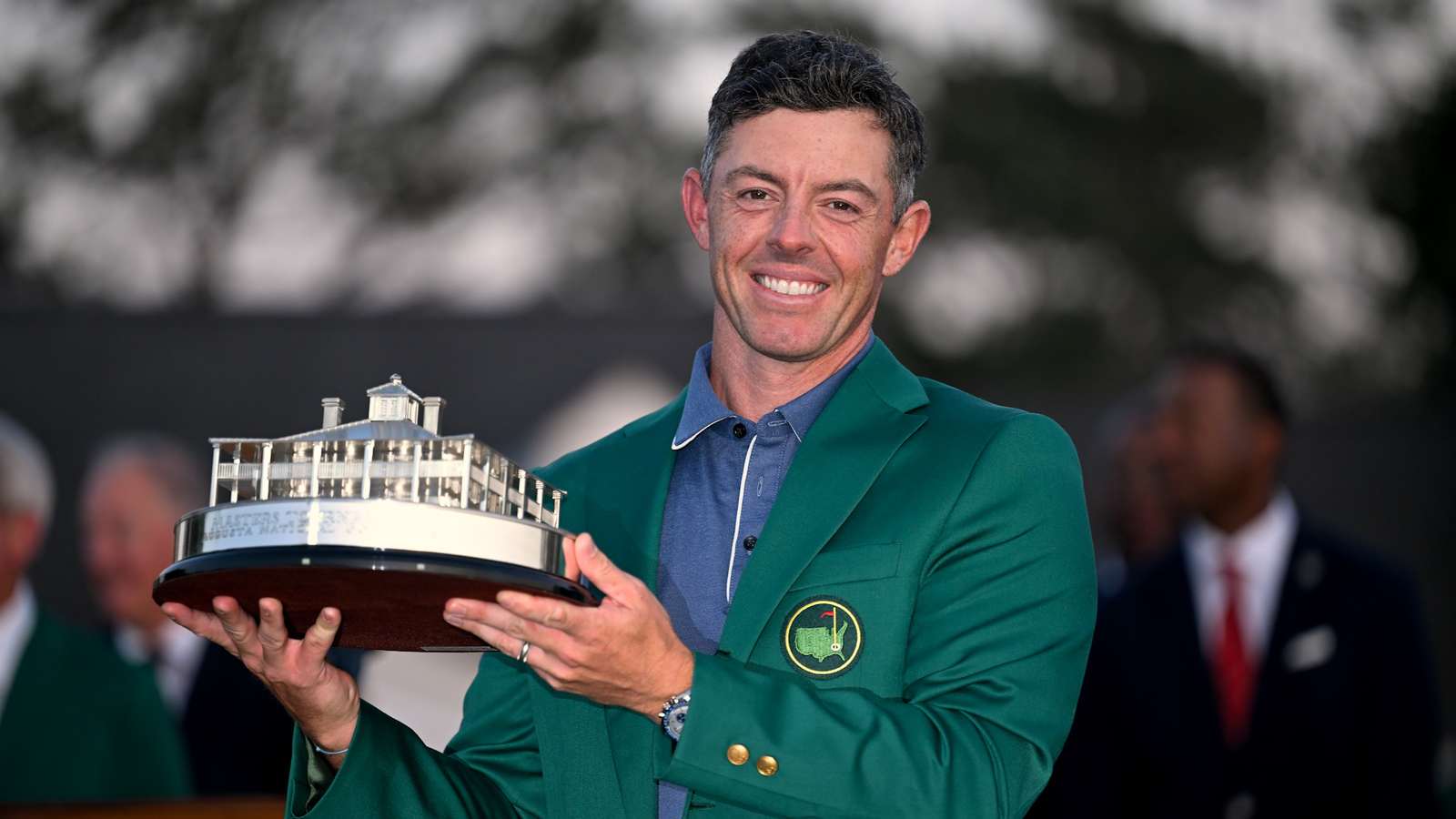
Rory McIlroy’s journey to completing career Grand Slam
McIlroy has regrets. The lead-in to the 2015 Masters was calculated. "McIlroy-mania" was at a fever pitch of his own doing. He said yes to everything. He led the cover of every golf magazine and starred in commercials. He soaked in the admiration and boarded the hype train as it roared to Augusta National. McIlroy was in pursuit of many things: his first Masters, his third consecutive major, and, crucially, the career Grand Slam. It was an opportunity to seal his legacy before turning 26. To join Woods as one of the two youngest ever to accomplish the feat. The weight of the world was on McIlroy’s shoulders, and he welcomed it.
The result wasn’t crushing – McIlroy mounted a valiant effort, finished tied for fourth, six shots back of Jordan Spieth – but it was educational.
“In hindsight, if I was really just focused on preparing the best way I could, I probably would have maybe not done as much of that stuff leading into it,” McIlroy said. “I maybe leaned into it a little too much. And then as the years went by it just felt like it was getting harder and harder.”
Each passing attempt left a new scar more prominent than the last. McIlroy came close in other majors, too. Those hurt, but nothing more than the annual departing flight from Augusta empty-handed. It never got easier than that first year. The pursuit of it became his guiding light, the only thing that really mattered anymore. McIlroy turned up to the first major of every year with that internal baggage and the external expectations of a golf world trying to will it into existence. It was suffocating, crippling at times. And the realization when it finally ended in 2025 was cathartic.
Others never felt that weight lifted. For as exclusive as the career Grand Slam club is, the crew of almosts is nearly as short and compelling. Twelve players have won three of the four majors, Scheffler included. Palmer never won the PGA Championship, nor did Tom Watson. Walter Hagen and Lee Trevino are missing the coveted green jacket. Byron Nelson never won The Open. Snead failed to capture the U.S. Open and called it his only regret in life. Two active players are still searching for their final piece of the puzzle: Spieth and Phil Mickelson.
Mickelson’s trials at the U.S. Open are well-documented, and his inability to close one out has left a mark on his resume and his psyche. Spieth’s pursuit of the PGA Championship remains an annual talking point, and he isn’t shy about its importance. He stated it is the one tournament he wants to win more than any other for the rest of his career, though he hasn’t come close to contending since 2019. He seems to get further away from achieving it each season.

Jordan Spieth on what it will take to complete career Grand Slam
Scheffler won’t let you in like the others will. There’s no PR campaign pushing his pursuit. McIlroy leaned into the chase. Spieth didn’t push it away. Scheffler is distancing himself from it. It’s antithetical to how he operates. If he’s placing similar internal pressure on himself, he’s not dropping hints. Asked earlier this year what it would mean to win the Grand Slam, Scheffler redirected and recited an answer we all hear often, one that has held true throughout this entire career: Just getting to the PGA TOUR was the dream. He grew up watching pros play at Royal Oaks and aspired to be like them. He wore pants as a junior to emulate the pros and mimicked their practice habits. He’s trying to win every week, major or not, career Grand Slam be damned.
“I never stood there in the mirror and said, I have to do this, but this was always something that I dreamed about doing,” Scheffler said. “... I get to live my dream out here playing tournaments and competing and the actual competition is one of my favorite things in the whole world. That's what I said, if I could, I would play every single week out here.”
Pushed again to address the career Grand Slam specifically, Scheffler said, “I would love to be able to win the U.S. Open. It's a tournament that I love. I love my country, I would love to be able to win my National Open. And I've had some success at that tournament before and I think it suits my style of game. I'm excited to go to Shinnecock this year and hopefully get it done.”
No acknowledgment of the career Grand Slam or the company he would keep if he joined. No crack of vulnerability to tell the world how much he wants it. Maybe that’s all there is to it, and maybe that’s why Scheffler will be far more successful than his modern counterparts. But Scheffler has proven to feel the weight of history before. He cried on Sunday morning of the 2022 Masters, overwhelmed by what was ahead and the pursuit of his first major championship.
“I was so stressed out. I didn't know what to do,” he said. “I was sitting there telling (wife) Meredith, ‘I don't think I'm ready for this. I'm not ready.’”
It was a moment that has defined this chapter of Scheffler’s career and one that he has wrestled with since. His own show of emotion overcame him, confounded by the cause of it all. At last year’s Open Championship, Scheffler eloquently questioned why he cares so much in a press conference soundbite that reverberated far outside the golf world, which watched the world’s best golfer attempt to rationalize his innermost thoughts in front of TV cameras and tape recorders.

Scottie Scheffler closes out win at The Open
"This is not a fulfilling life,” he said then. “It's fulfilling from a sense of accomplishment, but it's not fulfilling from a sense of the deepest places of your heart. There's a lot of people that make it to what they thought was going to fulfill them in life. And then you get there, then all of a sudden you get to No. 1 in the world, and they're, like, what's the point?”
All that questioning came before the career Grand Slam became so tantalizingly in reach.
Scheffler would love to win the U.S. Open, but he says it's not for all the reasons the rest of the world prescribes. He wants to win because he loves to compete, and the goal of any competition is to win. Scheffler places little value in what winning entails. He couldn’t tell you how much he won for any TOUR event. The admiration is fulfilling for the split second that victory is secured. Then it evaporates. Same with history-making. Does any of it give him an advantage when the next tournament begins and he starts at even-par like everyone else? He dislikes the obligations that come with winning: the extra attention, the media stops, the praise and the scrutiny.
Scheffler has reached a point where all of that is unavoidable. The world is watching, and he can’t ignore it. Every interaction is dissected. That was the case at Muirfield Village in everything that led up to that Friday afternoon range session. A day earlier, Golf Channel microphones picked up a frustrated Scheffler on the 16th hole. Every second of it was analyzed, its importance likely over-indexed as he vented to Scott.
Was it simply a moment of frustration? Was it the growing angst of his own internal expectations rising and him failing to meet them? Has any part of the external pressure that he’s blocked out for so long begun to seep through the cracks? Is he ready for this U.S. Open and everything that comes with it? The answer is the same one he gave when asked that Friday at Muirfield Village if he knew what he was doing well and poorly.
“I'm about to go find out.”


