Justin Rose embraces time, targets history at Masters
6 Min Read

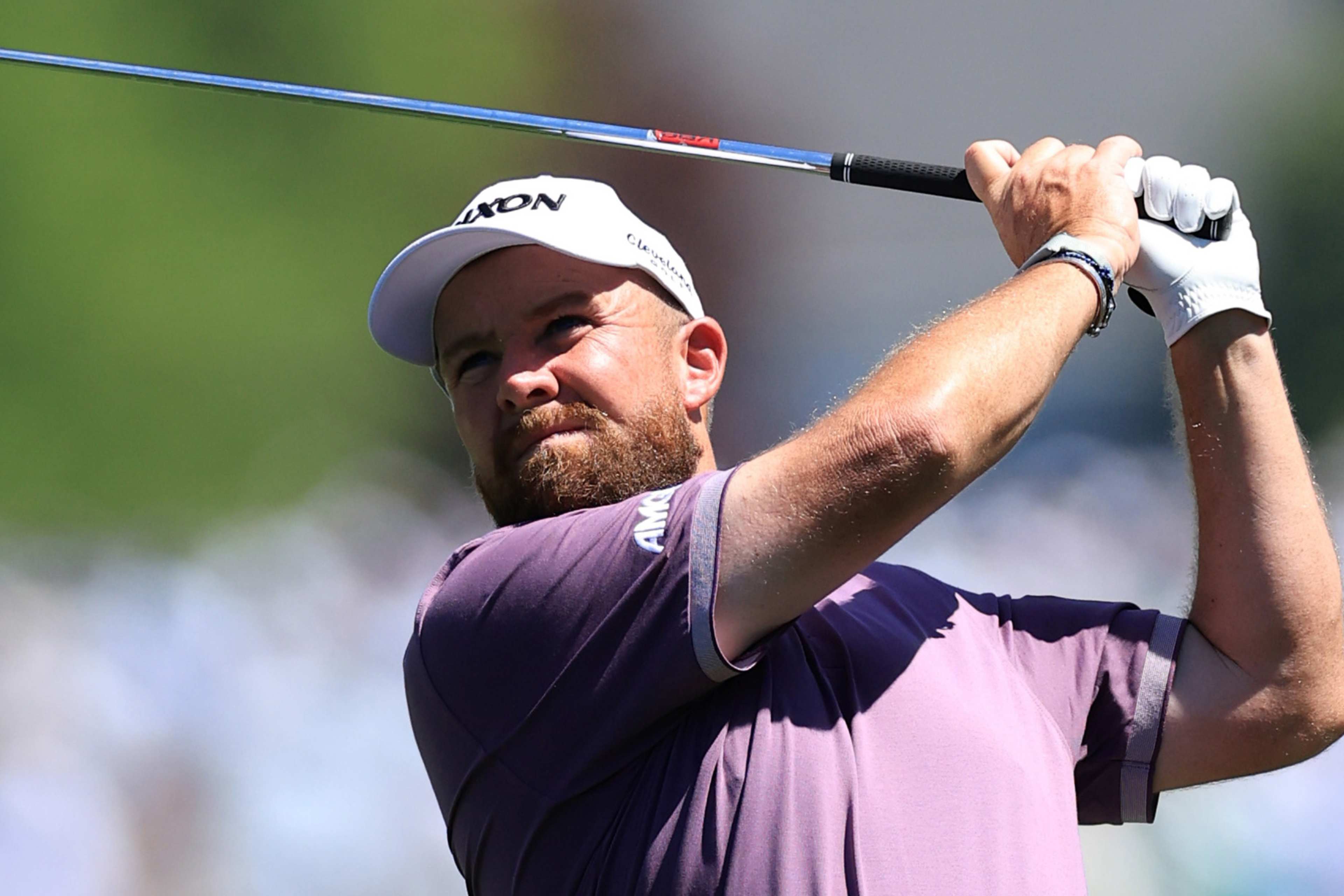
Justin Rose posts 3-under 69 in Round 2 at the Masters as he looks to avenge 2025 playoff loss. (David Cannon/Getty Images)
Players in Article
Players in This Article
Editor's note: This piece was published after the second round of the 2026 Masters. Justin Rose carded a third-round 69 to enter the final round three shots off the lead.
AUGUSTA, Ga. — There’s a certain clarity that comes with time – the kind that only reveals itself after close calls, near-misses and the slow accumulation of experience. At 45, Justin Rose isn’t chasing that clarity anymore. He’s living in it.
This week marks his 21st start at the Masters, a place that has given him as much heartbreak as hope. Few players know the contours of Augusta National Golf Club quite like Rose – not just the slopes and swales of the greens, but the emotional terrain that comes with contending here. Three times a runner-up. Fifteen top-25 finishes. And last April, a Sunday charge that included 10 birdies and ended only when Rory McIlroy outlasted him in a playoff.
For some, those scars might linger. For Rose, they’ve become something else entirely.
“I’m very aware that I've been close here,” Rose said Monday in his pre-tournament press conference. “I’m very aware that I’ve had tough, tough losses here. I also am aware that I enjoy this place. I don't want to feel that those three second-place finishes need to create a different sort of feeling for me.”
That’s the shift. At this stage of his career, Rose isn’t burdened by what hasn’t happened at Augusta – he’s informed by it. There’s a difference. It’s the difference between pressing and playing free, between chasing history and allowing it to come to you.
And yet, history is undeniably within reach.
Only eight players have ever won the Masters the year after finishing runner-up – a small, exclusive club that suddenly feels relevant. After opening with rounds of 70-69, he’s near the top of the leaderboard at 5-under par and in prime position to make a run at the green jacket.
“The point is you’ve got to put yourself there,” he said. “That’s the hard part.”
He’s done that. Repeatedly.
From his lone major win at the 2013 U.S. Open at Merion Golf Club to Olympic gold at the 2016 Games in Rio, from Ryder Cup battles for Europe to his wire-to-wire victory in February at the Farmers Insurance Open, Rose’s résumé is complete in almost every way. The Masters remains a missing piece. Not an obsession, mind you, but an opportunity.
“I'd say firmly in the desire camp,” he said when asked if he’d describe his quest for a green jacket as desire or obsession, “just because I know that the latter is not going to help me. It's probably professional discipline just to keep it in the desire realm.”
And if there’s an edge to be found now, it’s not in overpowering the course. It’s in understanding it – and himself.
“I don’t think about age on a day-to-day level,” Rose said. “Happy that the narrative around it is more positive than negative, for the most part. Definitely there is some motivation there to kind of keep going, keep pushing, try to find new habits, new ways of trying to get better, realizing that that's a pretty difficult ambition to sort of get better at this stage of my career.”
That pursuit looks different at 45. It’s less about reinvention and more about refinement. Rose insists there are still “areas of my game that I can improve on significantly,” and he’s leaning into that belief, not fighting the clock but working alongside it.
There’s also perspective – the kind that only comes from standing on the edge of victory and seeing, vividly, what might have been.
After last year’s playoff loss, Rose described a surreal sense of déjà vu, as if he had already experienced the win that slipped away.
“There was definitely a what might have (been) – when you realize you're that close, you can taste the victory,” he explained. “You know what it would feel like had it been the other way around. I could see what it felt like. I can see the celebrations. It all played out right in front of me.
“So I kind of lived it as if I'd have won it, but obviously without any of the real positive emotion that goes with that, but I kind of sensed everything.”
For some players, that might haunt them. For Rose, it seems to have freed him.
He’s no longer trying to control outcomes – only moments.
“I can only turn up on Thursday and execute,” Rose noted. "And get here on Monday and enjoy it. Those are the two things that I have control over.”
It’s a philosophy built not just on experience, but acceptance. Rose understands that greatness in golf – especially at Augusta – requires both precision and patience, execution and a touch of fortune. You have to be willing to win, yes, but also willing to lose.
“You can't skip through a career without a little bit of heartache and heartbreak, no chance,” he said. “If you're going to be willing to win them, you've got to be willing to kind of be on the wrong side of it as well.”
That heartbreak, in Rose’s case, has become a kind of fuel – not emotional, but intellectual. He’s learned from past playoffs. Adapted. Improved. Even in defeat, there’s progress.
And when he finds himself in contention now, the mindset is simpler, almost lighter.
“I felt like I was thinking ‘birdie,’” he said Friday after his 3-under effort. “That’s a nice mode to be in, and that felt similar to Sunday. That Sunday of the Masters last year, I felt like I needed to birdie every hole. I kind of wasn't aware what Rory was going to do on 13, all these type of things. I was just trying to run to the clubhouse as fast and hard as I could. That's the luxury of playing from behind sometimes. But there's a lesson in there of that's the best way to play sometimes, too.”
Rose understands the math, but more importantly, he understands the mindset required to even have a chance at joining it.
It’s the same mindset that carried him through that Sunday last year – playing aggressively, freely, chasing the clubhouse without fear. It’s also the mindset he believes is sustainable, even from the front.
At 45, Justin Rose isn’t trying to turn back time. He’s doing something more interesting: He’s using it.
If that leads him back into contention this weekend, he’ll know exactly what to do. And if things finally break his way, history won’t feel like something new.
It will feel familiar.