The unexpected stretch that won Rory McIlroy the Masters
7 Min Read
Rory McIlroy's road to the green jacket
Players in Article
Players in This Article
What shots do you remember from Rory McIlroy's triumphant Masters victory?
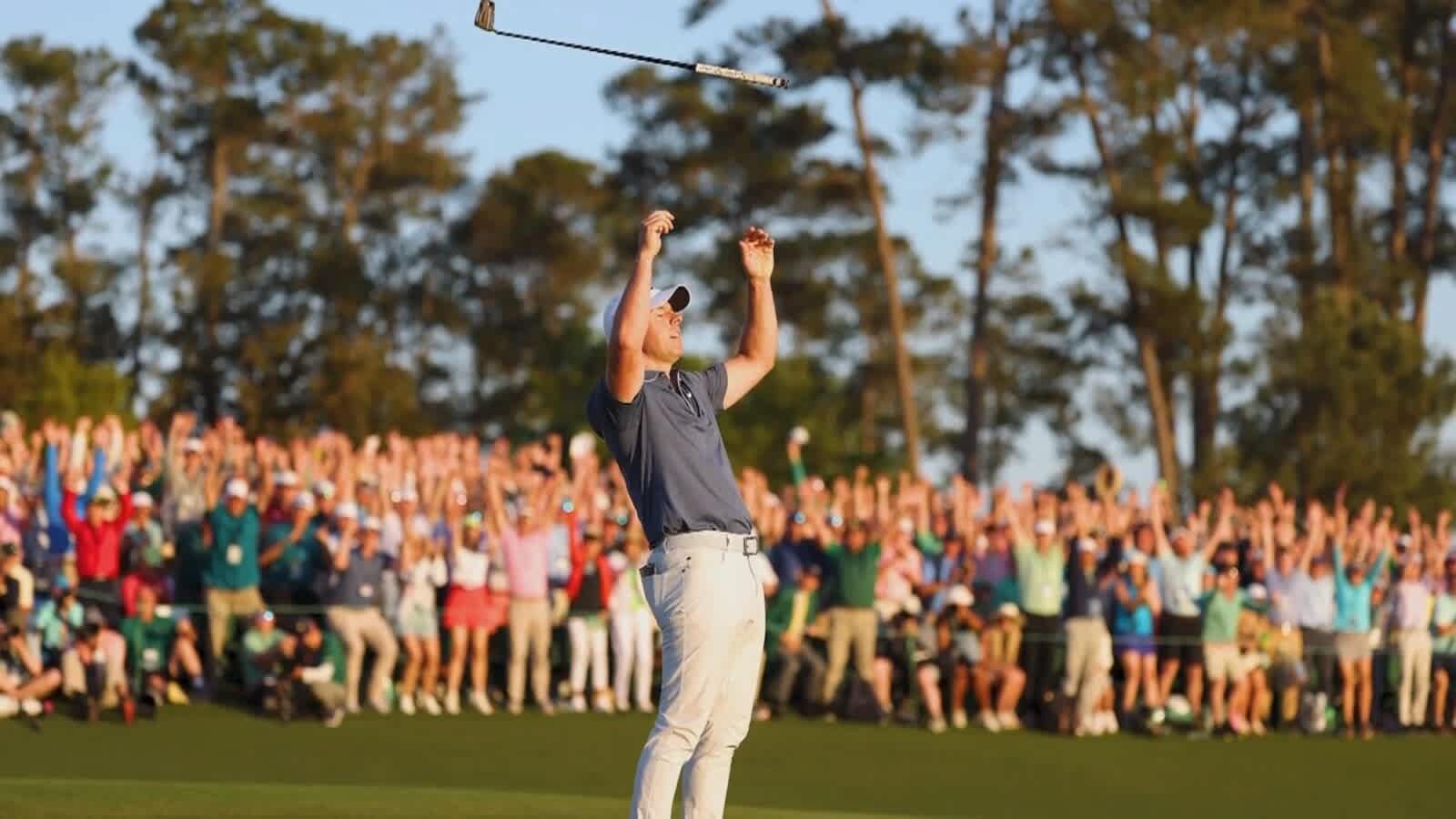
His approach into the 15th on Sunday – a towering 7-iron he slung around trees – likely comes to mind.
His shot into the 17th less than 30 minutes later, a majestic 8-iron that fell out of the sky and stopped just a few feet from the pin for another birdie might, too.
There was the shock at the 13th, when McIlroy inexplicably dumped a wedge shot into Rae’s Creek and let the field back into it. And then there’s the 3-foot birdie in the playoff that was a tap-in under normal circumstances but carried the weight of history and personal catharsis that made the cup look slimmer than McIlroy’s TaylorMade ball.
Those are the moments that will grace the highlight reels, that will be talked about by friends during a post-round beer and outlast us in the pantheon of sports history.
It’s not the stretch that won McIlroy the Masters.
Those shots were only made notable – and necessary – because of a different stretch of bewildering brilliance that put him in position to chase his decade-long Augusta National demons. Without it, McIlroy is still searching for the career Grand Slam, bemoaning another prime chance come and gone.

Rory McIlroy’s incredible Masters victory gives him 29 TOUR wins
The key to McIlroy donning the green jacket spanned across two days and two rounds: McIlroy’s second nine of the second round and the first six holes of his third round. He made the turn on Friday at 2-under, stuck in neutral and eight strokes back of the lead. By the time he tapped in for par on the par-3 sixth on Saturday, McIlroy led by three. He played the 15 holes in 10-under par.
“I feel like I won the Masters in a 15-hole stretch,” McIlroy said.
Feelings back up the reality. A dive into the data provided by Data Golf illuminates just how consequential that stretch of golf was for McIlroy and the tournament's outlook. Let us explain.
As McIlroy stood on the 10th tee on Friday, he had just a 2.6% chance to win the Masters, considerably worse than where he began the week (right around 8%).
It had been a rollercoaster to that point.
McIlroy had a dream start on Thursday, grabbing birdies at the third, eighth and ninth holes to quickly jump into the top five. He added another birdie at 13 that moved him into a tie for second, still bogey-free for the day.
Then disaster struck.
McIlroy hit his second shot on the par-5 15th over the green. Facing a delicate chip down the hill, McIlroy gave it too much pace and it rolled past the pin and into the pond that guards the front of the green. Forced to drop back on the other side of the water, McIlroy hit a middling pitch shot and settled for a two-putt double bogey.
It was bad but recoverable given how well he played to that point. But McIlroy did it again two holes later, again hitting his approach over the green at the 17th. His chip ran well past the pin and McIlroy missed his mid-range par putt. Then missed the comebacker for bogey, too – his second double bogey in three holes.
McIlroy was still in the tournament, even par and seven strokes back, but the first round was a microcosm of all of McIlroy’s Masters disappointments to that point … what could have been.
He sustained stretches of winning golf that outnumbered but didn’t outweigh the bad. The bad was too bad to overcome.
Stats began to pile in on Thursday night. No player had come back from two double bogeys in the first round to win. Seven strokes back placed him well outside most historical indicators for how eventual champions needed to begin their week. McIlroy had spent 14 holes on Thursday building a title charge.
The last four holes created a general consensus: he squandered it.
That general malaise toward McIlroy’s hopes extended into the start of his second round. He birdied the second hole, but otherwise couldn’t amass any momentum. He remained bogey-free, but showed frustration with poor swings at the sixth and eighth.
It looked like how his last decade had looked at Augusta National: a tortured soul searching for release.
McIlroy reached the 10th hole and a tee shot that derailed his best chance at winning the Masters back in 2011. This time, it was the start of his turnaround.
McIlroy striped a drive down the hill that found the famous speed slot. His approach was his best of the day, a short-iron stuck to tap-in range that McIlroy converted for birdie. His booming drive down the 11th turned the vaunted start of Amen Corner into a gettable hole. McIlroy did just that, striking another iron shot inside 10 feet and rolling in the putt. He evaded bogey at the 12th, getting up and down from a difficult position long of the green, another test to pass. The 13th hole would play boogeyman to McIlroy on Sunday, but on Friday, it was a launching pad. McIlroy’s drive found the pine straw along the right side, but with a clear lane to the green. He took advantage with an aggressive iron shot, right of the back right pin location, threading his ball just in between the hole and the water and setting up an eagle try around 10 feet. He rolled that one in, too, and suddenly the dream was back on.
McIlroy had made up five shots on the leaders in just four holes, now three back. McIlroy added another birdie at the 15th and parred his way in for a 5-under back nine, 66 overall. His win probability at that point was 17%.
“I was so frustrated (Thursday) night because I played so well, and you can make these big numbers from absolutely nowhere on this golf course, just like the most benign position,” McIlroy said after the second round. “So it was a good reminder. It was a good reminder last night that you just have to have your wits about you on every single golf shot."
McIlroy also said he met with his mental coach Bob Rotella on Friday morning. The duo agreed McIlroy needed to remain patient and not try to get back all the shots he lost late on Friday right away.
“I wasn't going to let two -- you know, two bad holes sort of dictate the narrative for the rest of the week,” said McIlroy.
Saturday’s start was where the narrative fully flipped – one of the best bursts of golf ever seen at the Masters. McIlroy began the day with six straight threes, the first time that had ever happened in Masters history.
McIlroy birdied the first, eagled the second and grabbed birdies at the fourth and fifth holes alongside a pair of pars on Augusta National’s two front nine par 3s.
“The energy around that day, and our group was pretty special,” said Corey Conners, McIlroy’s third-round playing partner.
The energy built as the streak continued. McIlroy’s birdie at No. 1 moved him within a shot of the lead and the eagle at the second – a chip in from behind the green – gave him the lead alone, one he kept the rest of the afternoon. Birdies at the fourth and fifth extended the lead to three strokes. McIlroy was the lone big name moving on a day known for it.
The history ended on the seventh. An errant drive forced McIlroy to scramble for a par. But the work was done. Within a 15-hole stretch, McIlroy transformed his hopes.

PGA TOUR players discuss Rory McIlroy's work ethic, Masters victory
McIlroy’s chance of winning jumped from 2.6% to 61%, a complete flip of his fortunes. He gained a total of 13.7 strokes for the week, but 11.2 of them came within those 15 holes. Put another way, 82% of the strokes McIlroy gained over the course of the tournament came in that 15-hole stretch (roughly 17% of the tournament). McIlroy gained strokes on the field on all but one hole (the 14th hole on Friday, which he parred). It’s a run without much precedence, the foundation that set the table for the Sunday theatrics.
McIlroy’s Masters will be remembered for his final round performance. A round that encapsulated just how hard it is to achieve a dream that repeatedly kicks you while you’re down and nab a spot among the greatest to ever do it as a Grand Slam champion.
But as with any dream, the foundation was laid long before the clinching moment.