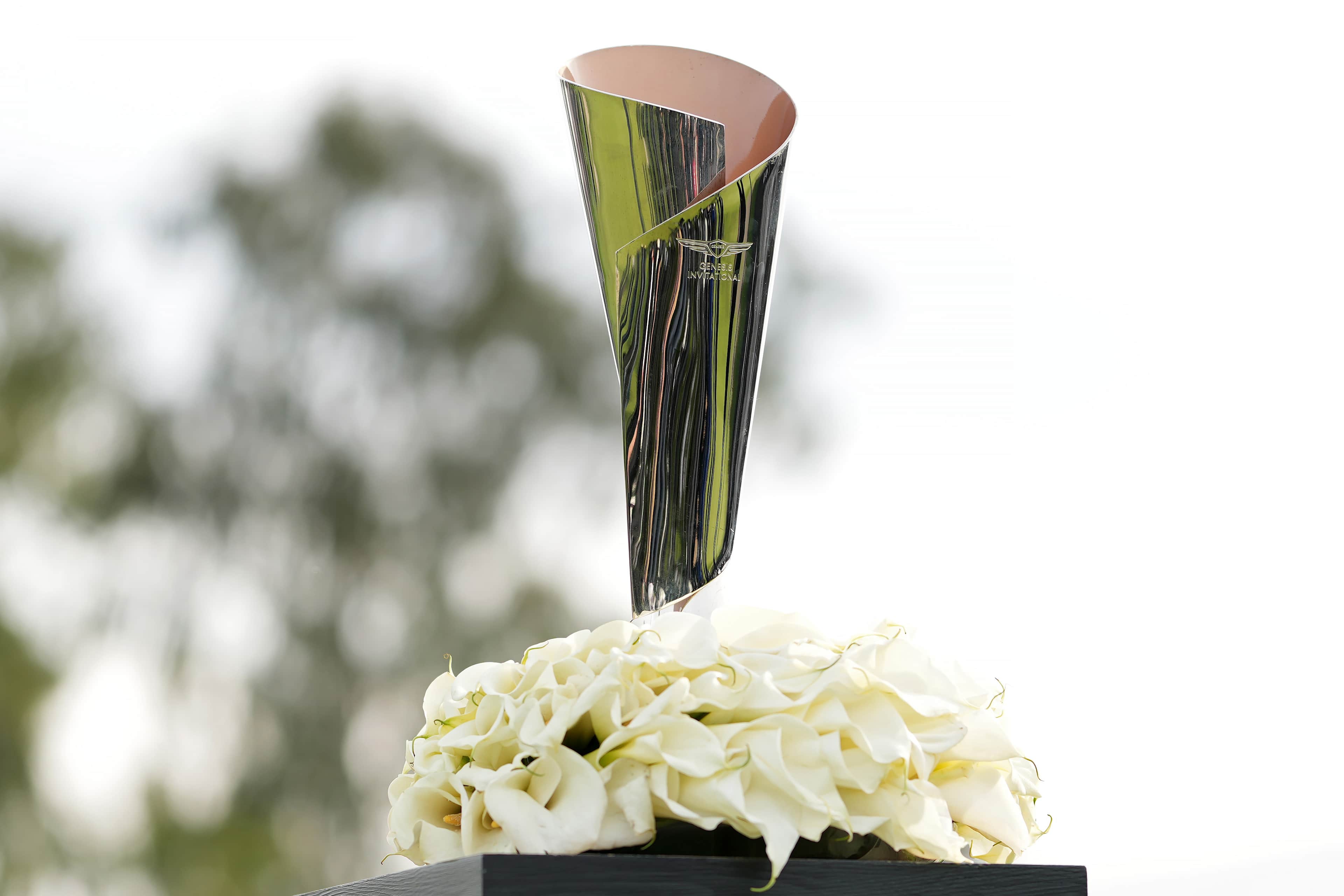
The Riviera Country Club at 100: Looking back at 'Hollywood stage for the game'


The mystique of Riviera
Players in Article
Players in This Article
The entrance is inconspicuous, in stark contrast to its surroundings and what lies behind its gates.
Driving west along Sunset Boulevard as it dips and climbs through the hills of the Pacific Palisades, your eyes dart to every passing palatial home guarded by tall hedges or the gates of nearby glitzy country clubs, like Brentwood or Bel-Air.
They’re a dime a dozen in these parts of Los Angeles, the city of stars. It’s sensory overload, so much so that it would be easy to miss what lies at the intersection of Sunset and Capri Drive.
There, at the top of one of these hills, an aged brown brick sign plainly states “The Riviera Country Club.”

Players share what they enjoy most about The Riviera Country Club
Don’t let the sign fool you. The understated motif wears off when you turn onto Capri, whisk past two blocks of homes, and the gates to Riviera open, revealing the Spanish Revival-style clubhouse that closely resembles its original form.
There, it quickly becomes clear what’s been known for 100 years: You have arrived somewhere special.
The Riviera Country Club is celebrating its centennial, now 100 years since a group of members at the Los Angeles Athletic Club started hankering for a golf course and found this site, hidden in a valley of the Pacific Palisades, just over a mile from the Pacific Ocean. They commissioned renowned architect George C. Thomas Jr. to design the course and spared no expense. They wanted the best course money could buy. Riviera is the manifestation of that demand.
“Quite possibly the very finest made golf course in the United States,” Ben Crenshaw once said.
In the 100 years since its establishment, Riviera has become one of the most iconic golf courses in America. For more than half that time, it has hosted a PGA TOUR event, first known as the Los Angeles Open and, for the last 10 years, as The Genesis Invitational.
With The Genesis Invitational returning to Riviera after a one-year hiatus because of the fires in the Pacific Palisades, take a walk down memory lane, from how The Riviera Country Club was established, through its evolution as a golf course and all the notable moments that have played out on its hallowed ground.
The early years
It didn’t take long for Riviera to earn its reputation as a haven for the crème de la crème of Los Angeles, which has persisted through the club’s lifespan.
“It was a classic Hollywood stage for the game,” said Bradley S. Klein, a renowned golf journalist, historian and architect.

The Riviera Country Club opening day ceremony in 1926.
That began with an investment fitting to draw the elite to the club. A group of Los Angeles Athletic Club members, known then as The Uplifters Club, sought to add a golf course to its offerings and began scouring the Santa Monica area for land in the early 1920s. As it’s told in "The Riviera Country Club: A Definitive History," written by Geoff Shackelford, the leader of the push to add a golf course, Frank Garbutt, shouted, “This is it! This is it!” when they came upon the land that would later become The Riviera Country Club.
In perhaps the only bit of bargaining that encompassed the project, the group of members bought the property for $264,500 (roughly $4.9 million today), well below the land appraisal of $1.5 million ($27.8 million today). It cost almost as much to build the course, $250,000, nearly quadrupling the average cost of a course built around that time, according to Shackelford. The clubhouse cost another $450,000.

A look at The Riviera Country Club golf course under construction before the club opened in 1926.
That big budget came with a firm directive: Create the best of the best.
It assuaged Thomas’ skepticism of the land as he was heavily recruited by Garbutt and motivated by him to take on the project. In a testament to that investment and Thomas’ work to transform the property, famed Augusta National architect Alister Mackenzie visited the property amid construction and called the site as fine as any he had seen and that the course design was “as nearly perfect as a man could make it.”
The original plan included an 18-hole championship layout, a shorter 18-hole course, and a mashie (pitch-and-putt) course just below the clubhouse. Plans for the shorter 18-hole course were abandoned within a few years, but the pitch-and-putt course was built and survived just short of two decades. It sat on the land that is now the driving range, but it was scrapped during World War II.
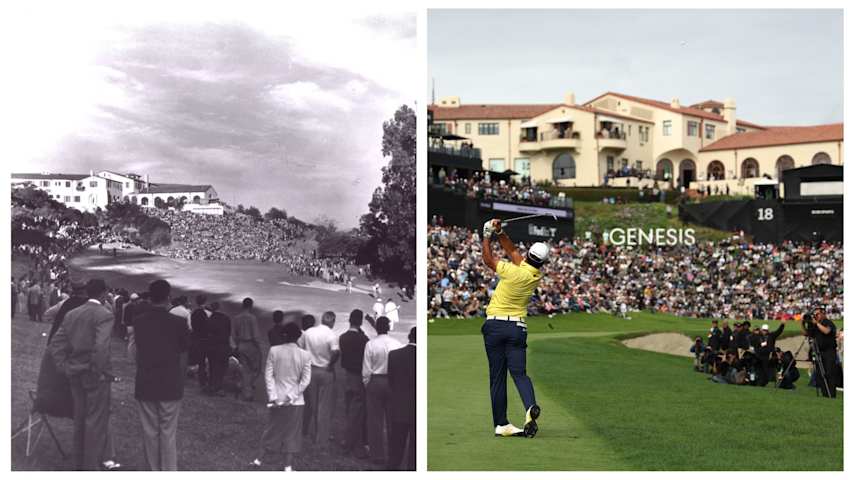
A look at the finishing 18th hole at The Riviera Country Club in 1945, when Sam Snead was victorious, compared to 2024, when Hideki Matsuyama won. (left, TGR Foundation; right, Getty Images)
As soon as the first tee balls were hit in the summer of 1927, it was enjoyed by Hollywood’s who’s who. Back then, it was the likes of Douglas Fairbanks, Mary Pickford and Walt Disney. Nowadays, it's Mel Gibson and Larry David – the latter of whom is the most well-known member (he also owns property along the course).
The golf course earned quick acclaim. D. Scott Chisholm wrote in Country Club Magazine: “The name of Riviera will be known throughout the universe of golf as Pine Valley of the West Coast.”
Many of the course's signature holes today were identified then as exemplary. Ben Hogan called the par-3 fourth hole, “the greatest par-3 in America.” And while that hole was a play on "Redan," a famous template based on the 15th at North Berwick in Scotland, Riviera’s par-3 sixth was thought to be a truly unique hole, with a donut-shaped green featuring a bunker in the center.
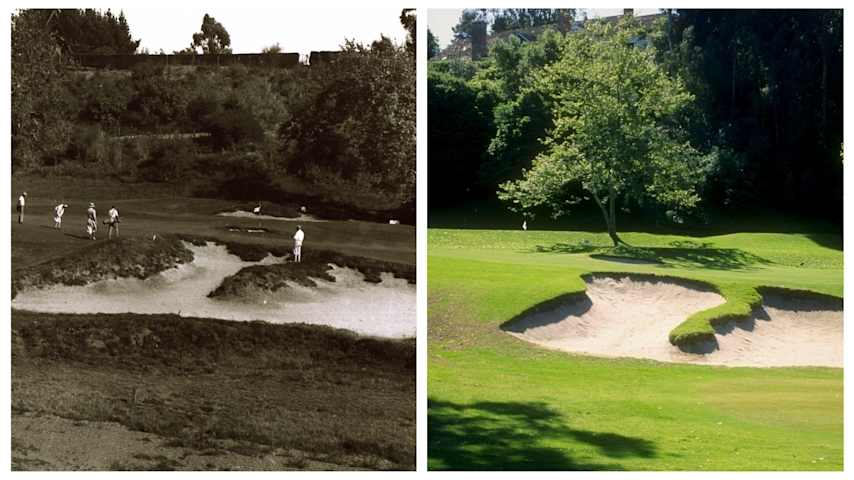
A side-by-side comparison of the par-3 sixth hole at The Riviera Country Club in 1927 compared to how it looks today. (left, TGR Foundation; right, Gary Newkirk/Getty Images)
Sam Snead called it “one of the best tests of golf you’ll ever play.”
Thomas didn’t live long enough to see Riviera become a world-renowned spectacle, passing away in 1932 after suffering a heart attack in his home. But he did call Riviera his “masterpiece,” a notable distinction given the courses on his resume include Los Angeles Country Club’s North Course (a recent U.S. Open host) and nearby Bel-Air Country Club.
Thomas did get a chance to see his creation test the best players in the world, though. Riviera hosted its first Los Angeles Open (now The Genesis Invitational) in 1929, just two years after officially opening. Scotsman Macdonald Smith won the event. Riviera hosted the tournament again in 1930, before a decade-long hiatus. Riviera hosted once more in 1941, then took a pause during the war and hosted sporadically over the next three decades until fully returning to the TOUR schedule in 1973. It was in that middle period that the legend of the Riviera and the tournament took shape.
The Golden Era
There’s perhaps no better run of champions in a pro golf tournament’s history than what Riviera produced from the mid-1940s through the early 1950s. As Shackelford describes it in "The Riviera Country Club: A Definitive History": “It was the scene of some of the finest golf ever played.”
That began with Snead in 1945, who won with a birdie on the difficult 18th hole on Sunday to outlast Byron Nelson, among others. Made all the more remarkable, Snead had just returned home from the war effort, where he served in the Navy.

A look at the iconic par-3 16th hole at The Riviera Country Club in 1940.
Nelson would get retribution the next year, though the rest of his 1945 was a decent consolation prize, too – 18 wins, including 11 in a row. He ran away from the pack at Riviera in 1946, winning by five shots. It was his 32nd win in his last 72 tournaments.
Nelson didn’t shy away from what he thought of the event. With the acclaim of Riviera to boost it, Nelson said he considered it “as important as a major.”
The run of major winners crowned at Riviera continued in 1947, the beginning of a legacy-making run that defined the golfer and course for years to come. That, of course, was Ben Hogan, who tied the course record with a 66 in the second round en route to a three-shot victory. Hogan won the event again in 1948 and set the tournament scoring record, which went unbeaten for 25 years. Then, months later, he won the U.S. Open at Riviera – the first time the major championship had come to California. After that, Riviera was aptly dubbed “Hogan’s Alley.”
The 1946 U.S. Open champion, Lloyd Mangrum, won at Riviera in 1949, a brief reprieve before the 1950 edition set the bar as perhaps the best tournament ever played at Riviera: The duel between Hogan and Snead. The circumstances around the event, even before the first tee shot was struck, were remarkable. A year earlier, Hogan suffered significant injuries when he was hit head-on by a bus. He broke his ankle and ribs, fractured his collarbone and had a double fracture in his pelvis.

A glimpse into the past at the fourth tee at The Riviera Country Club.
Somehow, though, Hogan healed quickly enough to compete at Riviera the next year. And, as it turns out, contend. A haven for movie stars, the plot of the 1950 Los Angeles Open mirrors a script so outrageous it’s difficult to believe.
Hogan sat five shots back of Jerry Barber through two days, and the tournament seemed to be Barber’s to win after he got through his Saturday round before brutal conditions befell Riviera in the afternoon with Hogan and Snead on the course. That was until tournament officials decided to call off the round entirely, as not enough players were able to finish their rounds before the day became a complete wash-out. In a replay of the round on Sunday, Hogan continued his climb up the leaderboard, now only two shots behind Barber. It appeared Hogan was in line for a historic win as he kept charging on Sunday and Barber faded, but the pesky Snead got in his way with birdies on the final two holes to tie Hogan. With more rain coming, the two-man, 18-hole playoff between two of the sport’s all-time greats was postponed for a week. When they returned, it was Snead who got the better of Hogan, shooting 72 to Hogan’s 76.
“Golf lore will remember the 1950 Los Angeles Open as one of the greatest and most dramatic tournaments ever played,” Shackelford wrote.
The Modern Era
Riviera has become recognized as one of the gems of the golden age of architecture. It’s also one that has held up remarkably well, relatively, to the modernization of the game. Unlike some properties, Riviera has had the necessary space to expand as players have gotten longer. The course will play a hair under 7,400 yards at The Genesis Invitational this year, but it was already playing over 7,000 yards for the 1948 U.S. Open. The shot values on many holes have changed, as it has on any "golden age" course, but it has remained a strong test of the game’s best, and, as Klein notes, remains incredibly engaging for the everyday player.
“The character of the ground game, the variety, the way in which the contours shape the requirements of an incoming shot, they're really interesting,” Klein said.
The course has undergone several renovation efforts in the last 40 years. Shortly after the club was sold to the Watanabe family in 1988, Bill Coore and Crenshaw were brought in to restore the greens and bunkering, bringing them closer to Thomas’ original intent. Over the last two decades, Tom Fazio has also come back repeatedly to touch up various spots on the course. The course looks slightly different than those early days, though it’s mostly aesthetic changes. The routing and intent of the holes have remained unchanged since the club's earliest years, a reminder of Thomas’ exemplary work.
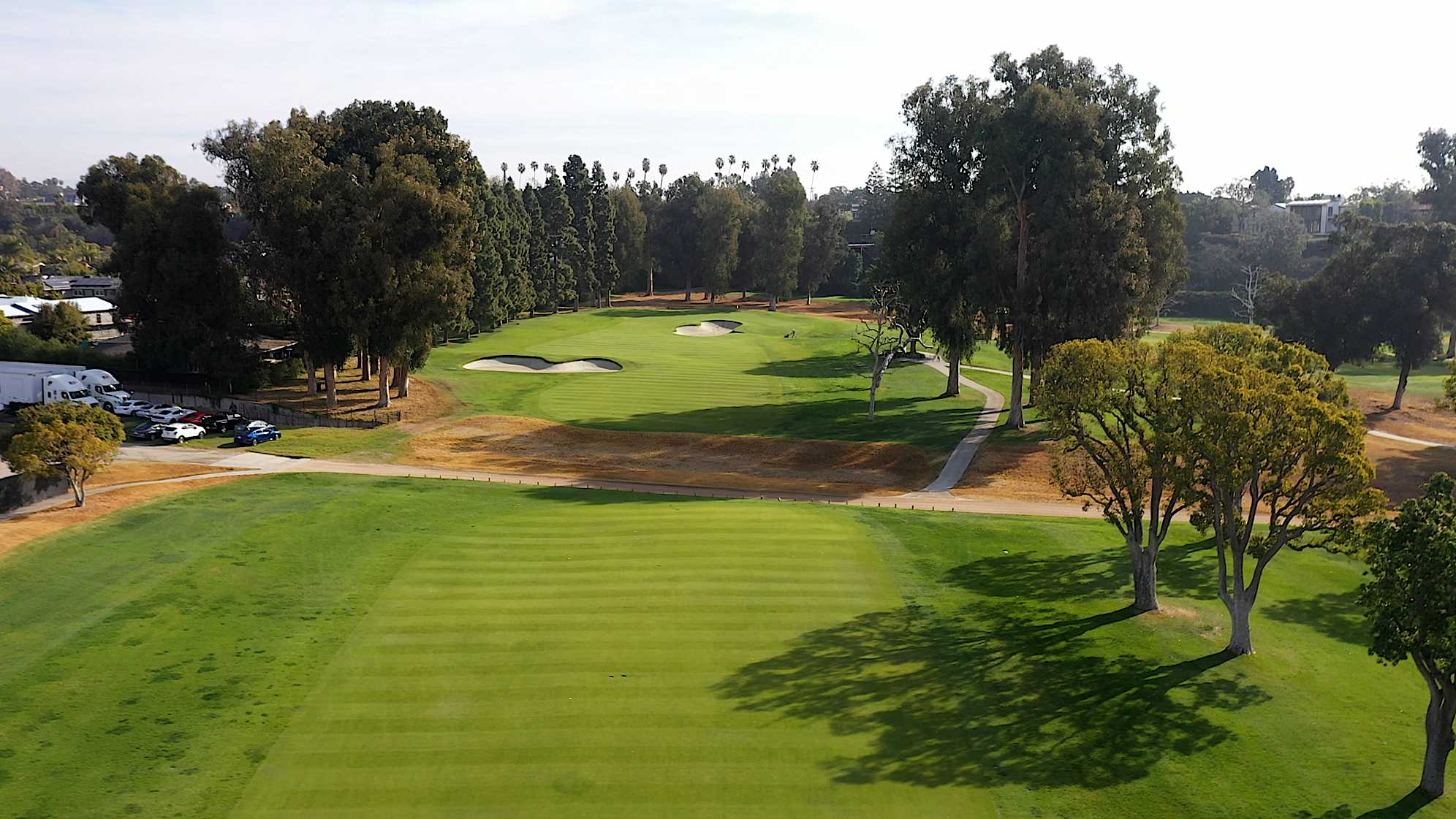
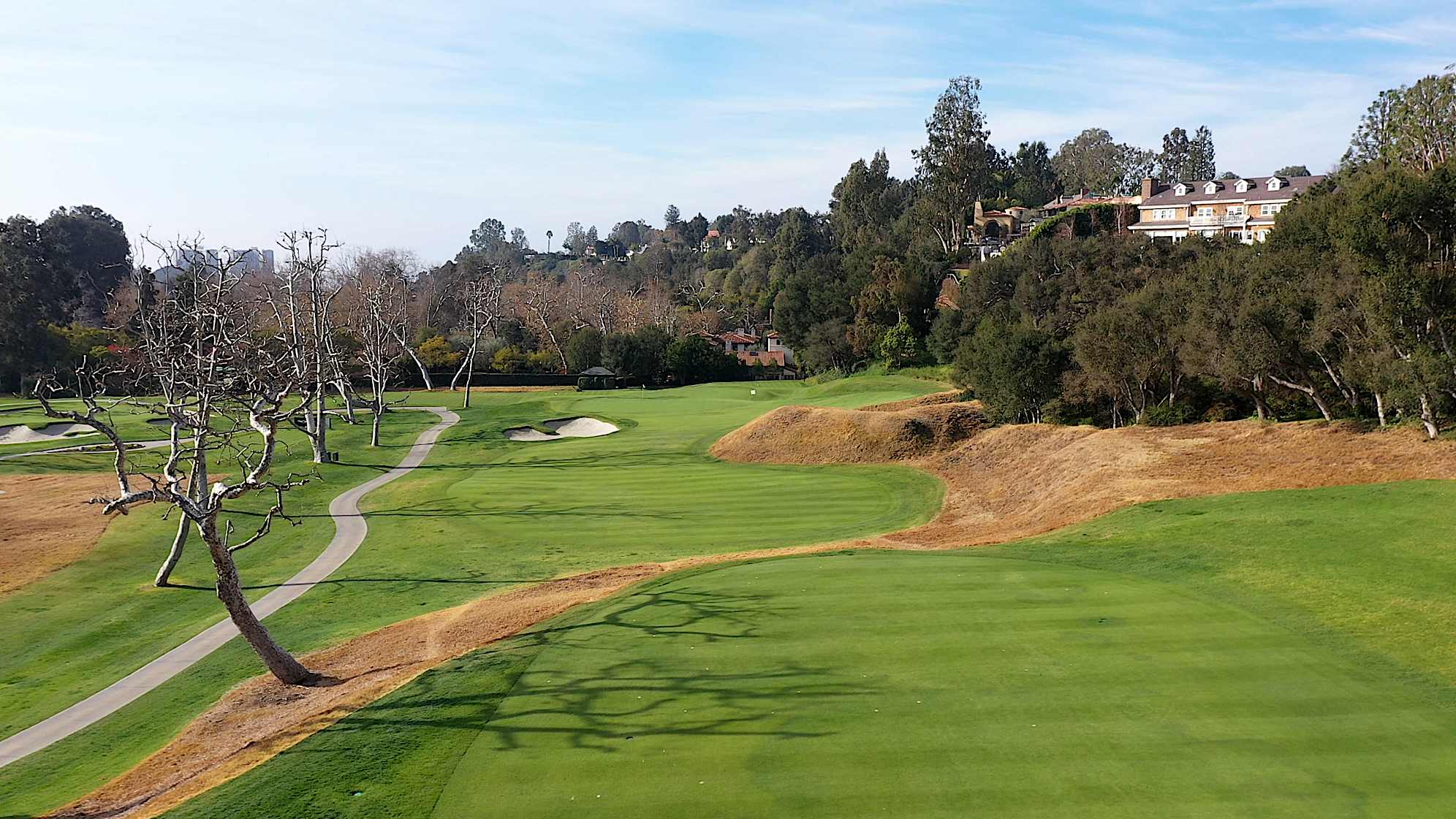
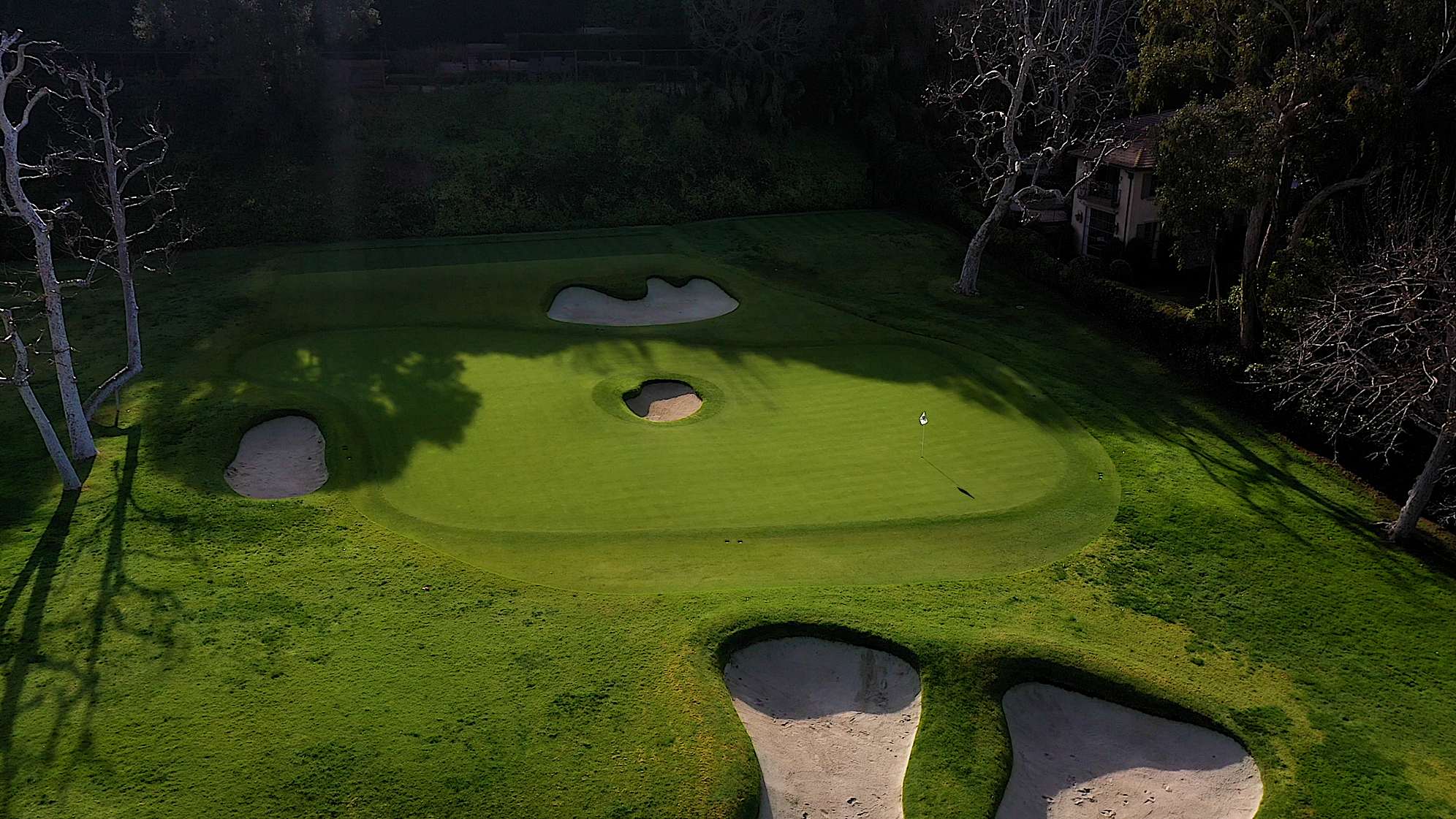
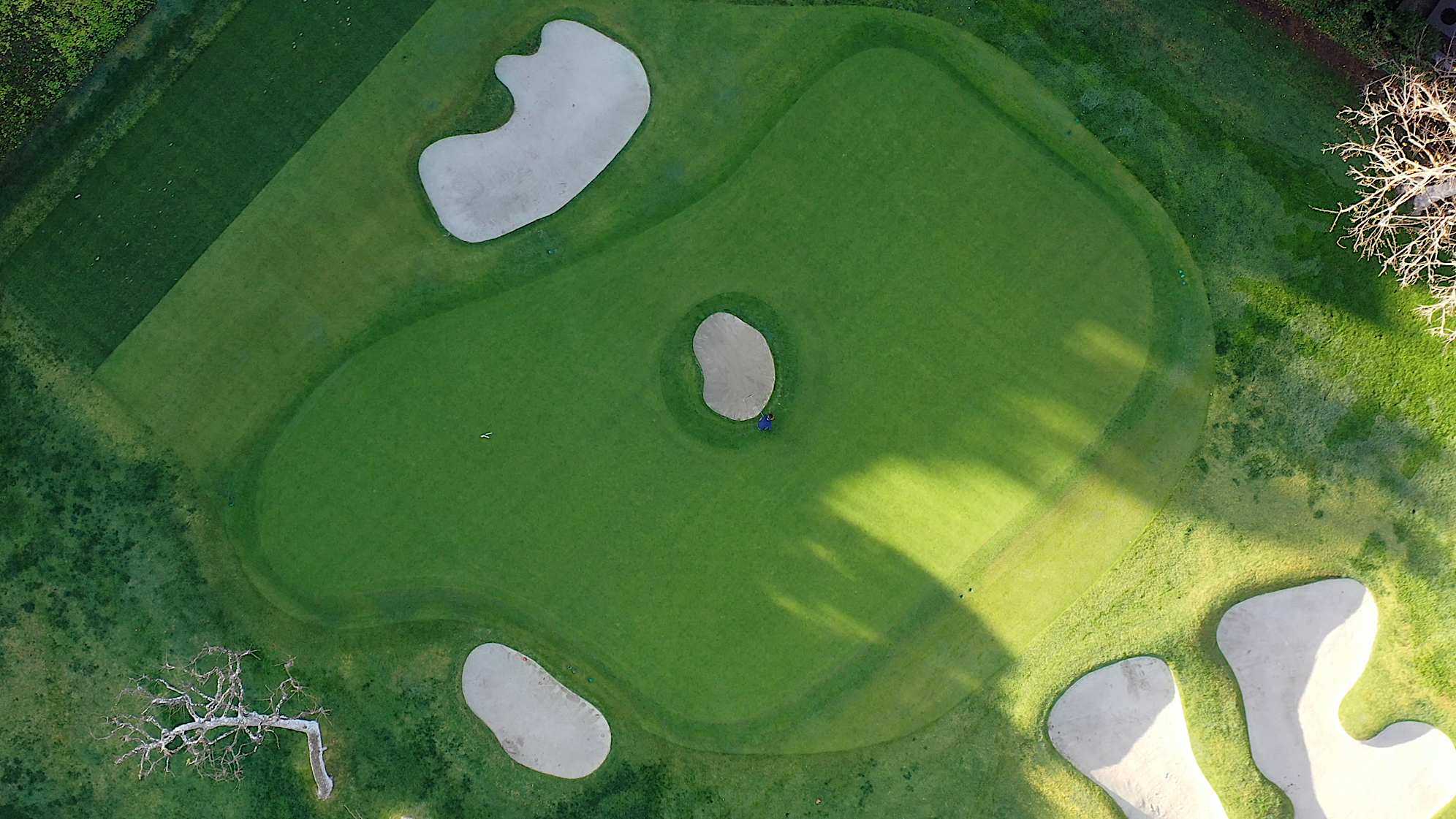
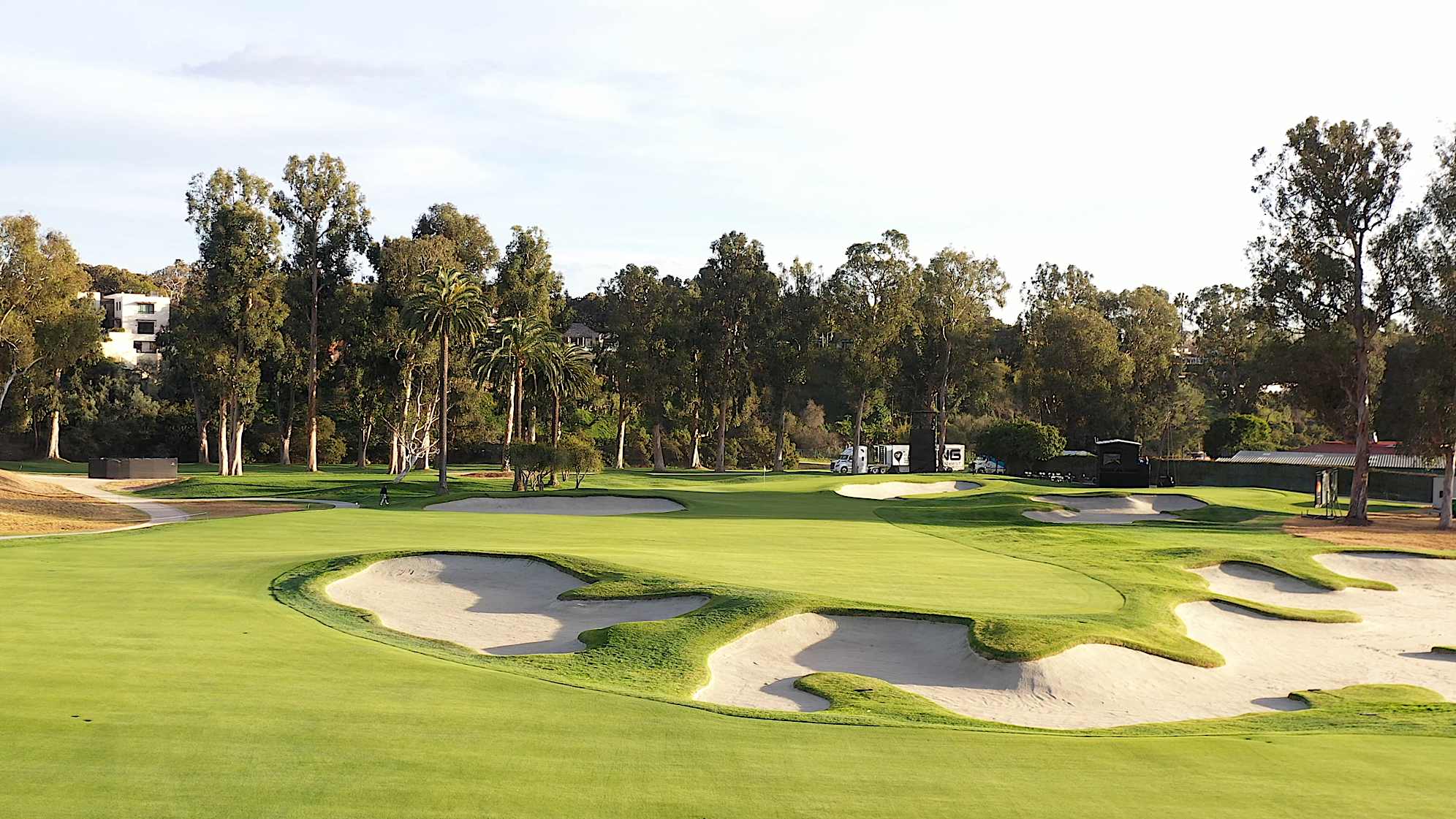
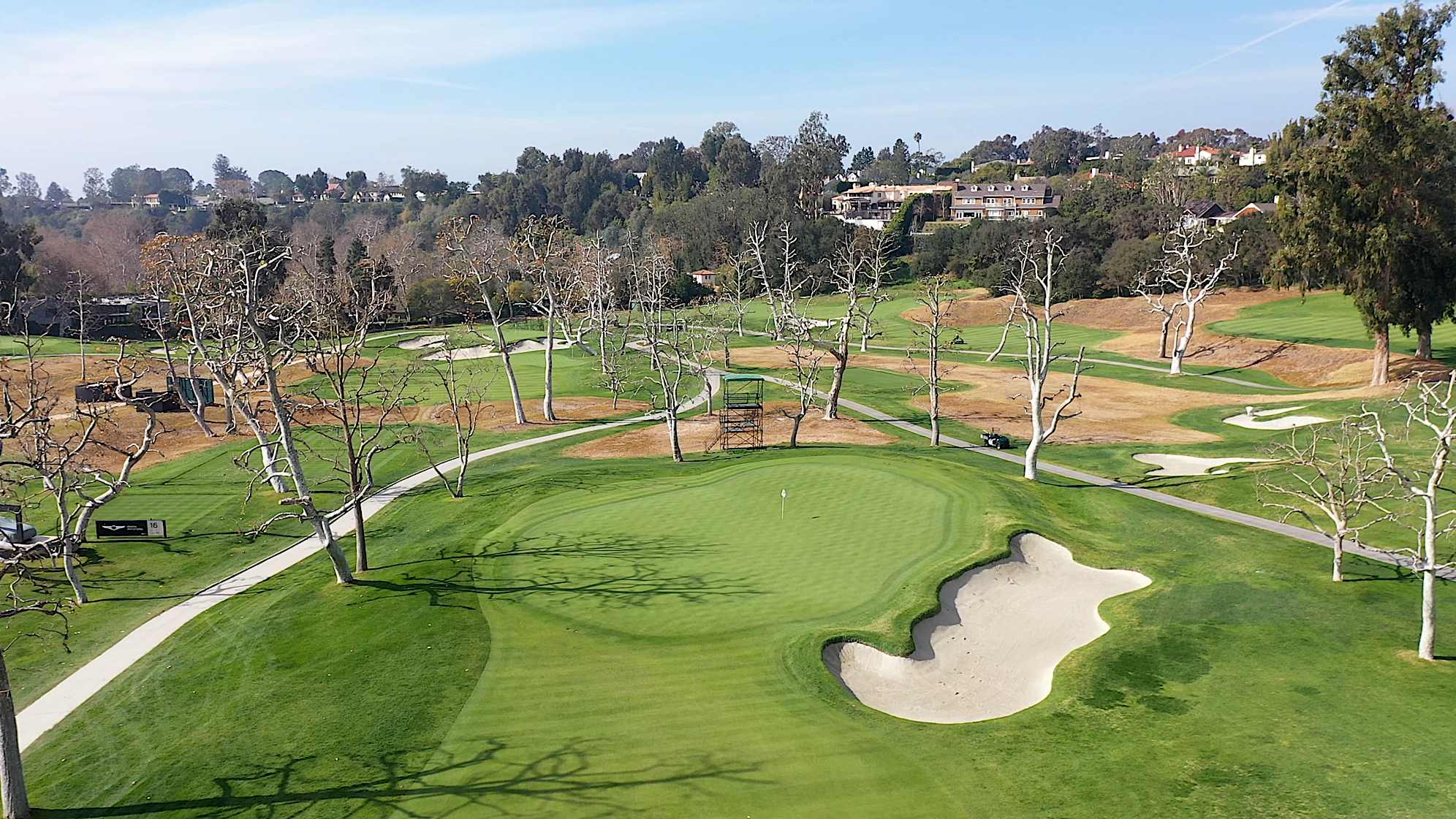
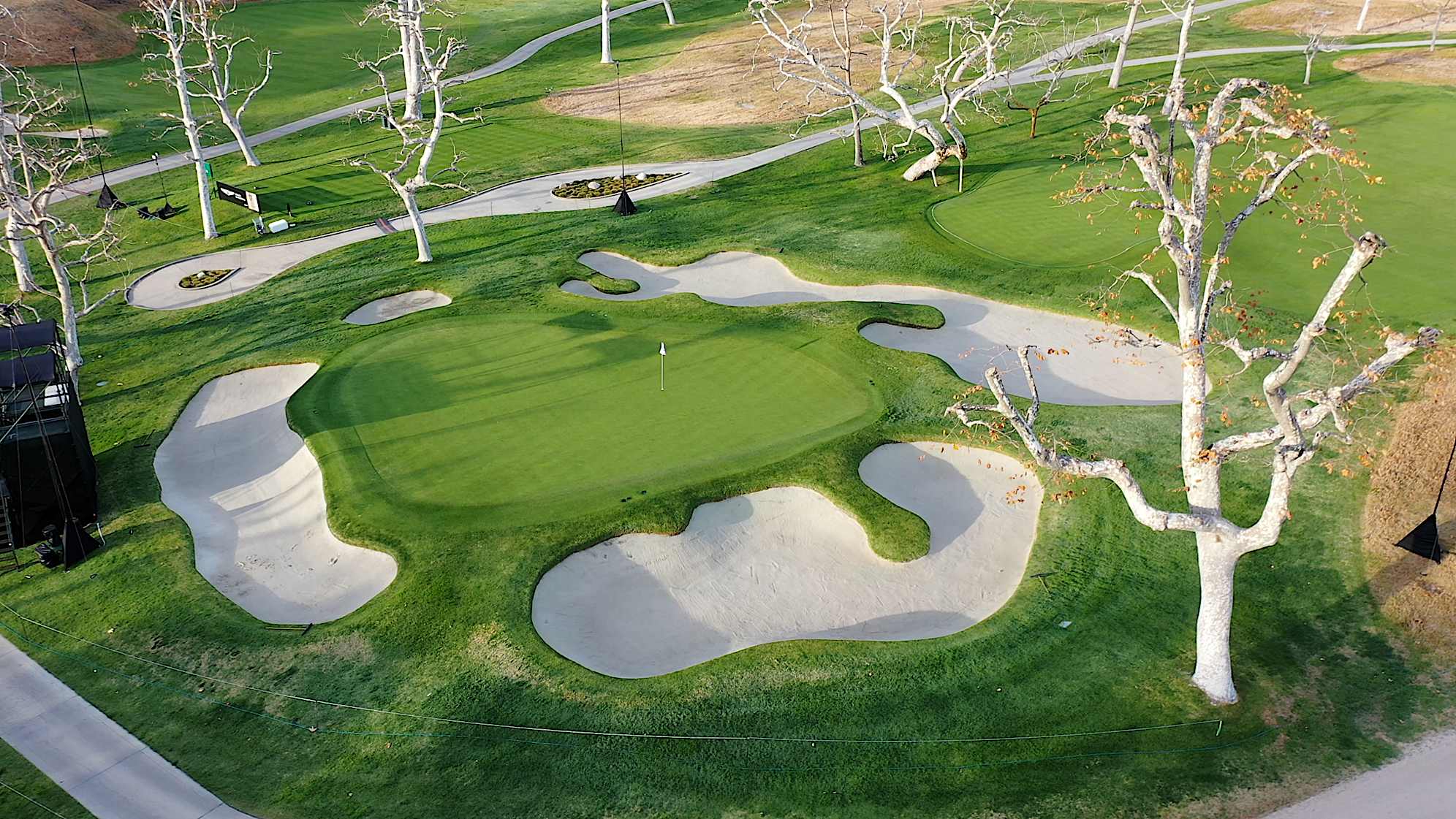
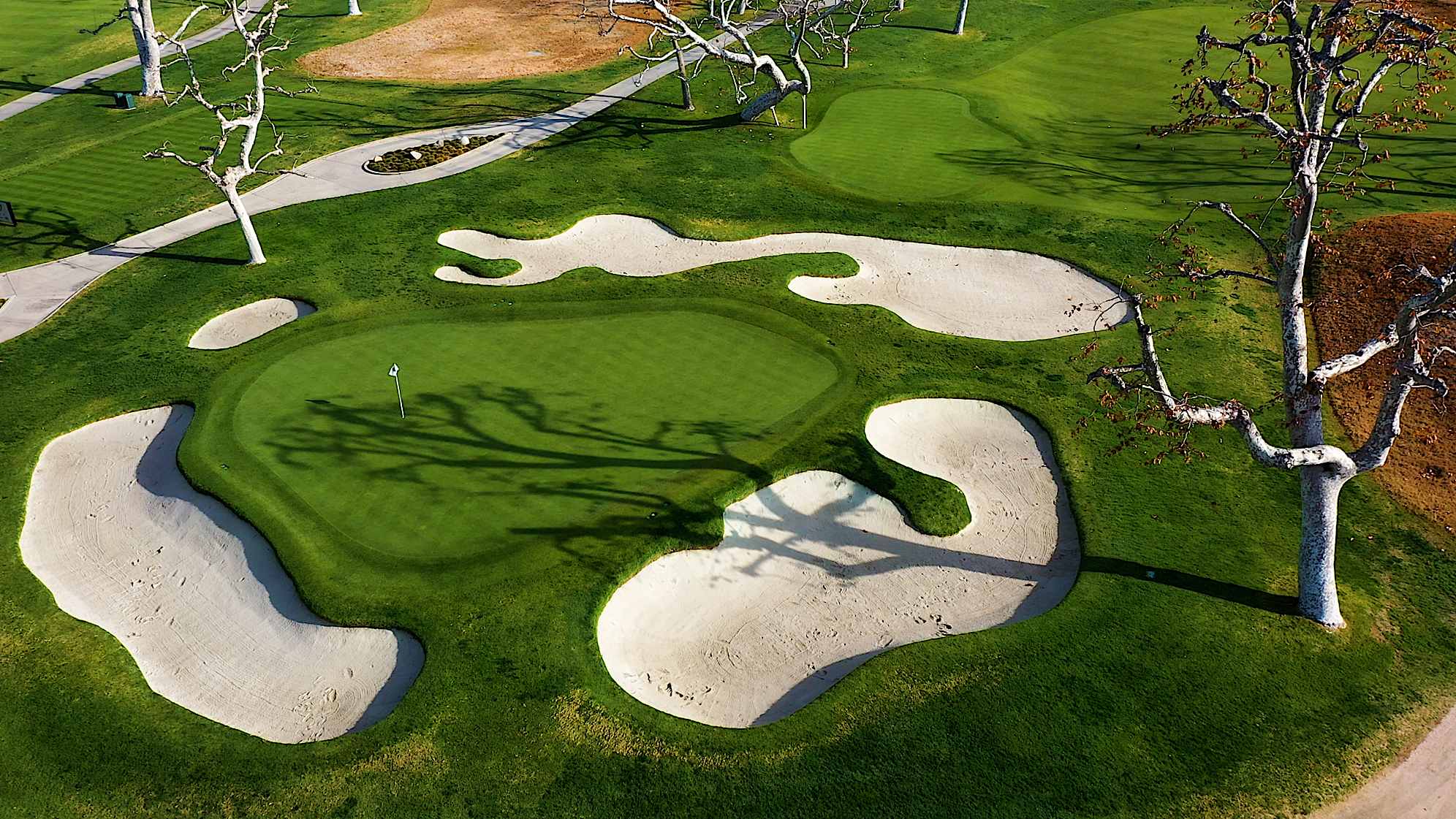
In Klein’s estimation, Riviera’s notoriety has only grown in recent decades with the increased prevalence of golf course photography and annual TOUR stop.
“It's only since the 1990s that golf courses on the West Coast have been considered an essential part of the American architectural tradition,” Klein said. “Riviera probably is the preeminent one. Pebble Beach did not have a design impact. It had an aesthetic and setting impact on the value of a coastal property. But in terms of design complexity, Riviera certainly was the leading course on the West Coast in terms of the evolution of architectural sophistication.”
It helps that one of the greatest players of all time took a particular liking to it, even if he could never figure it out himself. Tiger Woods made his TOUR debut at The Genesis Invitational in 1992 as a 16-year-old local amateur. He played it again in 1993, missing the cut both years, but it was the start of a lengthy relationship with the tournament and club, which has evolved into Woods and his organization hosting the tournament.
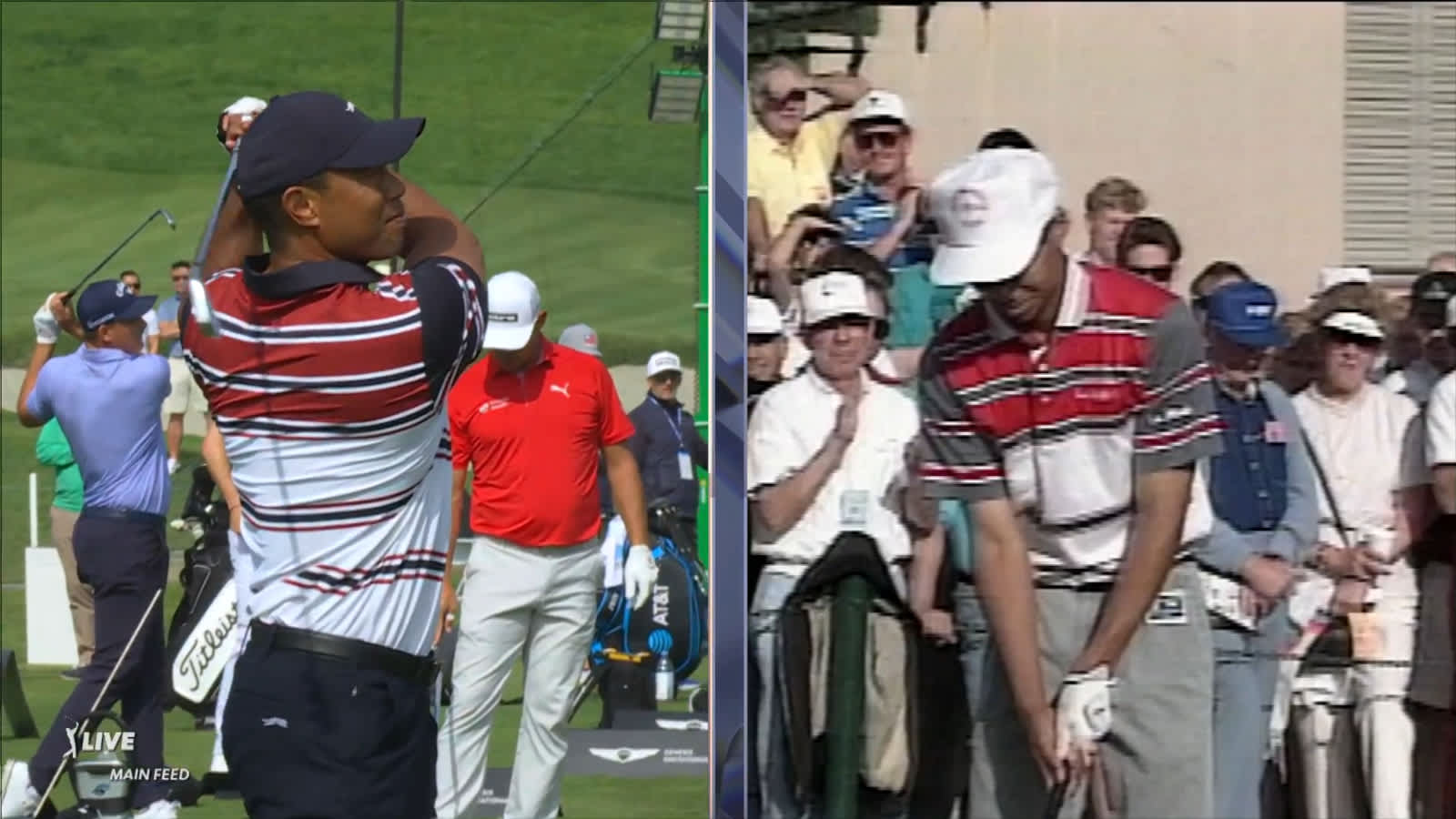
Tiger wears shirt paying tribute to 1992 debut at Riviera
Woods’ closest call came in 1999 at The Genesis Invitational. He finished runner-up to Ernie Els. It was one of Woods’ three top 10s in 15 starts at Riviera. It remains one of the few courses Woods regularly played but never won at.
“It is frustrating in the sense that this is a golf course that to me has been very comfortable visually,” Woods said. “But for some reason, I just haven't put it together at this event other than one time with a chance. For some reason, it just hasn't happened.”
The Genesis Invitational’s reputation has only continued to grow over the last decade with the present sponsor jumping aboard. The event was elevated to an invitational in 2020 and has become a stalwart on the TOUR’s Signature Event circuit in recent seasons. Past champions include Hideki Matsuyama, Max Homa and Adam Scott.
Scott’s 2020 win was notable, as he joined illustrious figures such as Tom Watson, Arnold Palmer, Hogan, Snead and Fred Couples as multiple-time champions at The Genesis Invitational.
Homa won in 2021, an emotional playoff victory over Tony Finau. Homa, who grew up in Burbank, California, was a toddler when he first walked The Riviera Country Club, coming to the tournament with his parents.

Max Homa’s winning highlights from Genesis
“I've been watching this tournament my whole life,” Homa said after the victory, choking back emotions before he said, “Wow. I didn't think it would be like this. ... The city of champions – Dodgers, Lakers, me now. It’s a weird feeling."
Matsuyama created the most recent bit of magic at Riviera in 2024. The Japanese superstar shot a scintillating Sunday 62, including three straight birdies starting at the 15th to zoom past a crowded leaderboard and win by three strokes. In his heater of a back nine, Matsuyama stuck it to 8 inches on the hardest hole on the course, the 499-yard, par-4 15th. He managed to hit it even closer at the 16th, stuffing an iron to 6 inches for another tap-in birdie. When he made another birdie on the par-5 17th, that secured his victory. Matsuyama was the first Asian player to win The Genesis Invitational since 1987.

Hideki Matsuyama’s Round 4 highlights from Genesis
In every era, Riviera has proven to be a favorite among TOUR pros. In the early years, Nelson referred to it as “one of the greatest golf courses in this country.”
Eight decades later, Homa said, it’s “the best layout on TOUR. It’s got the star power of the actual city, and it has that City-of-Angels feeling once you’re at the golf course. It’s got it all.”
That’s been true for 100 years.