
Getting ahead of injury: Inside PGA Tour, Cleveland Clinic’s proactive approach to player health

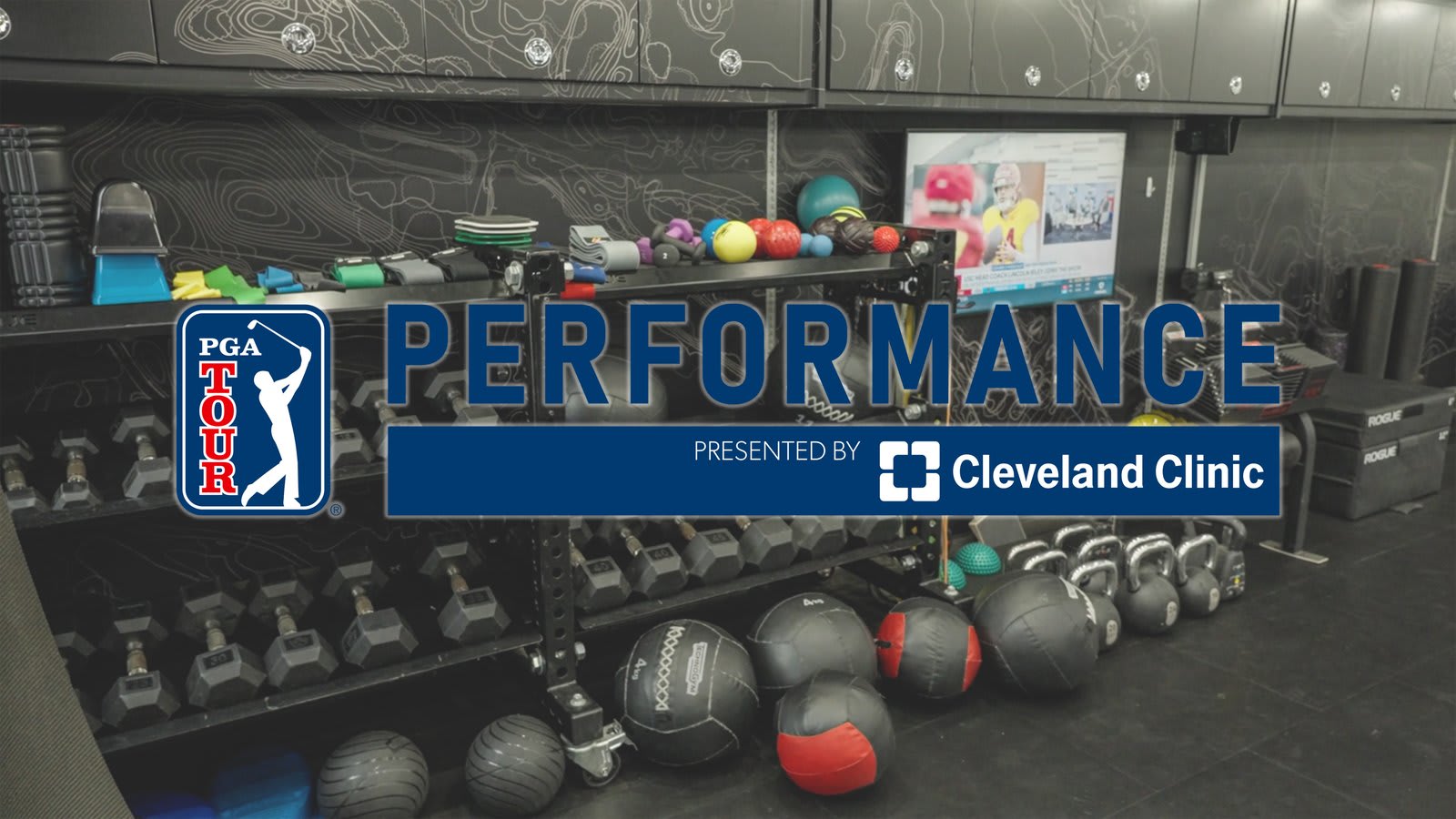
How PGA Tour, Cleveland Clinic partnership helps players prevent injuries, optimize performance
How an integrated approach from the PGA Tour and Cleveland Clinic is helping players get ahead of injury, optimize performance
How an integrated approach from the PGA Tour and Cleveland Clinic is helping players get ahead of injury, optimize performance
Editor’s note: This is Part 2 in a three-part series from the PGA Tour and Cleveland Clinic offering a behind-the-scenes look at today’s modern approach to player health and performance. This series will explore what players can access inside the PGA Tour Performance Truck presented by Cleveland Clinic, how Cleveland Clinic experts use testing and insights to identify potential issues before they become injuries and how a comprehensive approach to health can help players stay competitive longer.
For a professional golfer, an injury rarely begins the moment something hurts.
It can start much earlier – with a subtle change in movement, a shift in workload, an imbalance between the two sides of the body or a player’s numbers looking just a little different from normal.
The challenge is identifying those signals before they become a problem.
That’s where the expertise inside the PGA Tour Performance Truck presented by Cleveland Clinic becomes particularly valuable. Testing and technology provide information, but it’s the clinicians who can connect those findings across time to better understand an individual player.
For Paul Saluan, M.D., Director, Strategic Initiatives and Clinical Development for the Cleveland Clinic Global Peak Performance Center, that means focusing less on whether an injury can be prevented altogether and more on reducing its risk.
“We want to be in the injury risk-reduction realm, because I don’t say ‘prevention.’ You can’t prevent all injuries, but you can create an environment of significant risk reduction,” Saluan said.
That approach is about more than getting a player through the next tournament. It’s about building a better understanding of the individual athlete over time.
“One percent better, one year longer,” Saluan said. “If you can achieve that in a professional athlete, you have achieved unrivaled success.”
Looking for the signals
Golf presents a particular challenge because the same motion is repeated thousands of times, often at high speeds and forces. Rather than a single traumatic event, risk can build gradually through repetition, workload and insufficient recovery.
“It’s repetition of the same movements over and over again, which then leads invariably to overuse injuries,” Saluan said.
That makes understanding a player’s individual baseline especially important.
Michael Dakkak, D.O., a primary care and sports and exercise medicine physician with Cleveland Clinic, views the process as a continuum that starts with learning more about an athlete as early as possible.
“The more we know earlier, the better we can predict long term,” Dakkak said. “It’s never too early to get screened for any condition. So, if somebody comes in at high risk or knowing that they have something, we got to get ahead of it instead of being reactive.”
The proactive approach extends beyond the musculoskeletal demands of the golf swing.
Tamanna Singh, M.D., a sports cardiologist and Director of the Sports Cardiology Center and Stress ECG Lab and Co-Founder/Co-Director of WISER (Women’s Integrated Sports, Exercise, & Research) at Cleveland Clinic, works with cardiac screening designed to identify potential concerns early.
“From a cardiac perspective, we perform electrocardiograms (EKGs) for initial cardiac risk assessment, and we’ve done this within the Cleveland community, with our collegiate athletes and for the professional leagues here,” Singh said.
The purpose is not automatically to remove an athlete from competition if presenting with a potential risk. Instead, screening can identify a potential concern and provide information that can lead to further evaluation when necessary.
“We’re not looking and wanting to take people out of sport; our goal is to identify anybody who might be that at-risk individual,” Singh said. “The goal, again, is not to take someone out of play, but to really empower them with more information and knowledge.”
That education can have implications beyond a player’s competitive career, particularly when potential risk factors are identified early enough to address through lifestyle and training habits.
Understanding the Tour athlete
The physical demands of golf are only part of the equation. Players also navigate travel, inconsistent sleep schedules, long tournament weeks and changing environmental conditions.
Those factors can make the Tour environment itself part of the health equation.
“We see the temperature shift with places around the globe getting hotter across the board,” Singh said. “So now we have to take that into account.”
Singh notes that can mean practical considerations such as hydration and electrolyte supplementation, recovery, shade and opportunities for players to get out of the heat during tournament days.
But the people working directly with players have an advantage that no single test can replicate: They see those players repeatedly.
Corey Hug, PGA Tour physical therapist, said that daily interaction makes subtle changes easier to recognize.
“What we see is like you think about golf and back injuries, a very common injury,” Hug said. “But if you can stay ahead of that by looking at: Do they have good hip mobility? Do they have good thoracic mobility? If those things are good, they’re less likely to develop a back injury because those things will develop because of overuse.”
That familiarity also allows the team to recognize when a player’s body is operating differently than usual.
“When we see guys every day, we get to know their bodies,” said Hug. “We can tell if their body is working at its normal level, or if they’re tired, they’re fatigued. Then, hey, we need to intervene. Let’s build in some recovery; let’s get some therapeutic treatments.”
From today’s fix to tomorrow’s solution
The ability to identify a problem early only matters if it leads to an appropriate response.
For Hug, that means addressing what a player needs immediately while also looking for the underlying issue that could cause the problem to return.
“There’s a short-term fix and there’s always the long-term fix,” Hug said. “And with that long-term fix, it’s: ‘Let’s build this into your program.’”
That long-term work can include recovery, strength and stability programs that are personalized to the player and adjusted throughout the season. Testing can help make that work more precise, particularly when it identifies asymmetries or changes in an athlete’s readiness.
“Objectively, if we have asymmetries side-to-side, whether that’s ranges of motion, the amount of force that you can generate, your rotation of a joint, the mobility of a joint … all those things play a role in each player,” Dakkak said. “And everybody’s going to have different differences side to side.”
The objective isn’t necessarily to make every player perfectly symmetrical. It is to understand what is normal for that individual and recognize meaningful changes.
“If there’s a big discrepancy, probably know that they’re going to compensate somewhere else in their swing and probably allow a risk of injury happening,” Dakkak said.
That information can help clinicians and performance staff determine when a player may need to adjust, recover or intervene before a small issue becomes something larger.
Getting ahead of the problem
That ability to connect screening, observation and intervention is what makes the approach broader than simply treating an injury after it happens.
Tom Hospel, the PGA Tour’s chief medical advisor, described the goal as including both sides of the equation.
“It’s all-encompassing,” Hospel said. “We want to make sure that players are able to compete at their highest level, and that means that we want to prevent injuries first and foremost. But beyond that we want to respond to whatever illness or injuries that do come about.”
For Dakkak, the earlier that process begins, the more information clinicians have to work with.
“Anytime we can get people screened earlier, that’s key. You can never be too early to get screened,” Dakkak said.
And the opportunity extends beyond what clinicians already know how to identify. As more information is collected across players and sports, Saluan noted, the data itself could lead to new insights.
“With their overall health, there are going to be things that we discover, as we move forward, that we’re not aware of right now as clinicians,” Saluan said. “We just don’t have the capacity to really put all that data together and then generate a complete synthesis of all relevant information available to us."
The same concept can extend across professional sports, where information can potentially be shared and compared.
“The information we will accumulate will be very useful for everybody, all athletes of all ages and levels of expertise,” Saluan said.
But the opportunity isn’t simply collecting more information. It’s learning how to use it earlier – to understand what is normal for a player, recognize when something changes and turn that information into an individualized response before a problem has a chance to become an injury.
And perhaps that is the central distinction in the way modern player health is approached: The goal isn’t simply to know what happened after something goes wrong.
It’s to understand the athlete well enough to recognize what might be happening before it does.