



Justin Rose is timeless. Is he ageless?
10 Min Read

Justin Rose on his decision to switch equipment manufacturers to McLaren Golf
Players in Article
Players in This Article
Justin Rose lingers, carefully examining the contours of Augusta National’s fifth green. It’s the trickiest on the course, a massive complex with slopes severe and subtle, but Rose is no stranger to it. Rose first competed in the Masters in 2003 and hasn’t missed one since 2011. He has 116 competitive rounds at Augusta National in his memory bank and likely 100 more for practice, as he is on this sunny Monday afternoon.
Chris Gotterup stands nearby, now waiting on Rose. The two spent the last 15 minutes individually dissecting this green, but Rose isn’t done. Gotterup walked along all sides of it, eagerly trying to soak up every bit of information the course provides in his first spin around the front nine. It’s why he’s with Rose. Gotterup sought out the Masters veteran for a practice round, ready to learn from him.
Every hole has followed the same cadence. The two walk the fairway together, chatting through strategy and life, before splitting off into their own worlds on and around the green. Each does their due diligence, Gotterup learning the intricacies of Augusta for the first time and Rose refamiliarizing himself with them. Each time, Gotterup, the Masters rookie, was ready to move before Rose. He had seen what he needed to see. Rose, prepping for Masters No. 21, felt there was more to do.
At this particular moment, Rose is just long and left of the fifth green, hitting chips and putts to the various hole locations he knows are coming. It’s not a place he misses often. A quick spin through the Masters’ trove of video indicates Rose has only played from this area once in the last decade. That doesn’t deter the 45-year-old, who spends an extra five minutes trying a litany of high spinners, low bumps and firm putts as Gotterup watches on. You never know what you might need, and Rose is in no position to waste a chance.

Justin Rose reflects on viral email
Rose is well aware that his opportunities are dwindling. Later that week, the Englishman would squander a golden opportunity at major No. 2, carrying the lead into the back nine before a string of bogeys derailed him. The next time Rose tees it up at Augusta National, he will be older than Jack Nicklaus was during his improbable 1986 victory. Some could choose to be deterred by a result like that.
Rose is emboldened by it, particularly now.
Each close call is what Rose calls a “moment.” At this stage of his career, it’s what he’s chasing. Moments that validate the hard work. Moments that convince him to continue. Moments that make him feel timeless as he ages. He’s on a good run.
Why?
He’s embracing their fleeting nature. When you know your golfing mortality is dwindling, your focus sharpens and your appreciation amplifies. He’s not desperate. He’s determined. The arrival of another major means another chance for a moment.
“Time is of the essence,” Rose says.
Aronimink Golf Club is unfamiliar to much of professional golf. The club has hosted three men’s tournaments in the last 17 years. Rose is one of two players to have played in all of them, along with Rickie Fowler. Both will compete at this week’s PGA Championship.
Play for as long as Rose has and there is bound to be connective tissue in the stops made along the way. But even for Rose, a man who has been everywhere, Aronimink is the site of numerous pivotal moments. He won the 2010 AT&T National here, the second TOUR title of his career, only four weeks after his first. A pro for 12 years, with four DP World Tour wins and several successful years on TOUR, Rose was an established name, but that was the start of his further ascent. He would win at least once per year for the next decade across the U.S. and Europe, including the 2013 U.S. Open down the road from Aronimink at Merion Golf Club.
Rose nearly won when the TOUR returned to a new-look Aronimink for the 2018 BMW Championship. His putt to win on the 72nd hole lipped out, and he lost in a playoff to Keegan Bradley. Nevertheless, the result propelled Rose to world No. 1 for the first time. He won the FedExCup the next week.
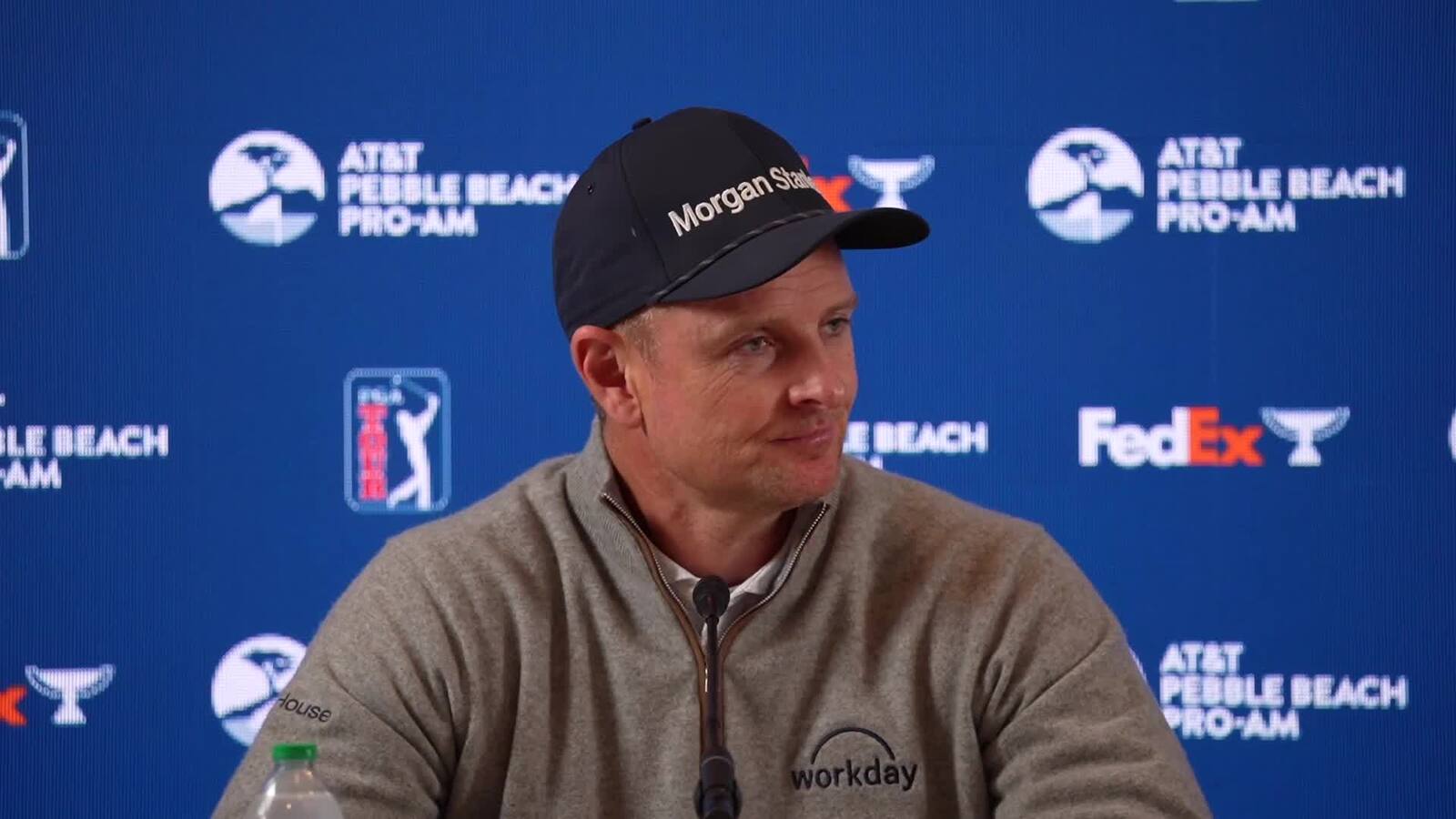
Justin Rose on lessons learned throughout his career
Rose returns this week amidst his best stretch of golf since he left Philadelphia as world No. 1 eight years ago. A runaway winner in San Diego this February, Rose is back inside the top five of the world rankings for the first time in six years. He finished third at the Masters, his fourth top-three finish there and third top-three finish in his last nine majors. He’s sharp, focused and maximizing what he has.
Doing this at age 45 is unlikely, especially in this era. Any major victory moving forward would make him one of the five oldest to ever do it – heady territory. Rose and Adam Scott are the last men of a different era left standing, but Scott hasn’t had the consistent major success Rose has had recently.
Most of his European contemporaries – Luke Donald, Sergio Garcia, Lee Westwood and Graeme McDowell, to name a few – have fallen off. Rose and Scott have been able to keep up, despite the distance gains and technological advancements that have pushed the sport younger.
To understand why Rose has sustained top form, you must start with his maniacal pursuit of physical longevity. He credits tennis legend Novak Djokovic for inspiring him, whom Rose calls the “benchmark” of longevity. Djokovic has traveled down every rabbit hole in his push to keep playing. He’s long outlasted Roger Federer and Rafael Nadal and kept Carlos Alcaraz and Jannik Sinner at bay longer than expected.
Rose’s manifestation of Djokovic’s methods is his recovery RV, which he gutted of its traditional fixtures. The sofa was replaced with a red light bed. The bedroom is now a “wet room,” equipped with hot and cold tubs, a steam shower and an infrared sauna. He also has a spin bike with oxygen bags hooked up to it.
“He’s the only player I know who has his own recovery trailer,” says Phil Kenyon, Rose’s putting coach. "The stuff in there, I can’t quite comprehend it. I’m waiting for the post-major party. That’s when I’ll go back.”
Rose is surprised that other players haven’t emulated his creation. The PGA TOUR provides recovery equipment, but not to the extent or ease of Rose’s setup. It’s an edge, he believes.
“It’s about stacking the deck in your favor by continually running a good process more than the next guy,” Rose says.
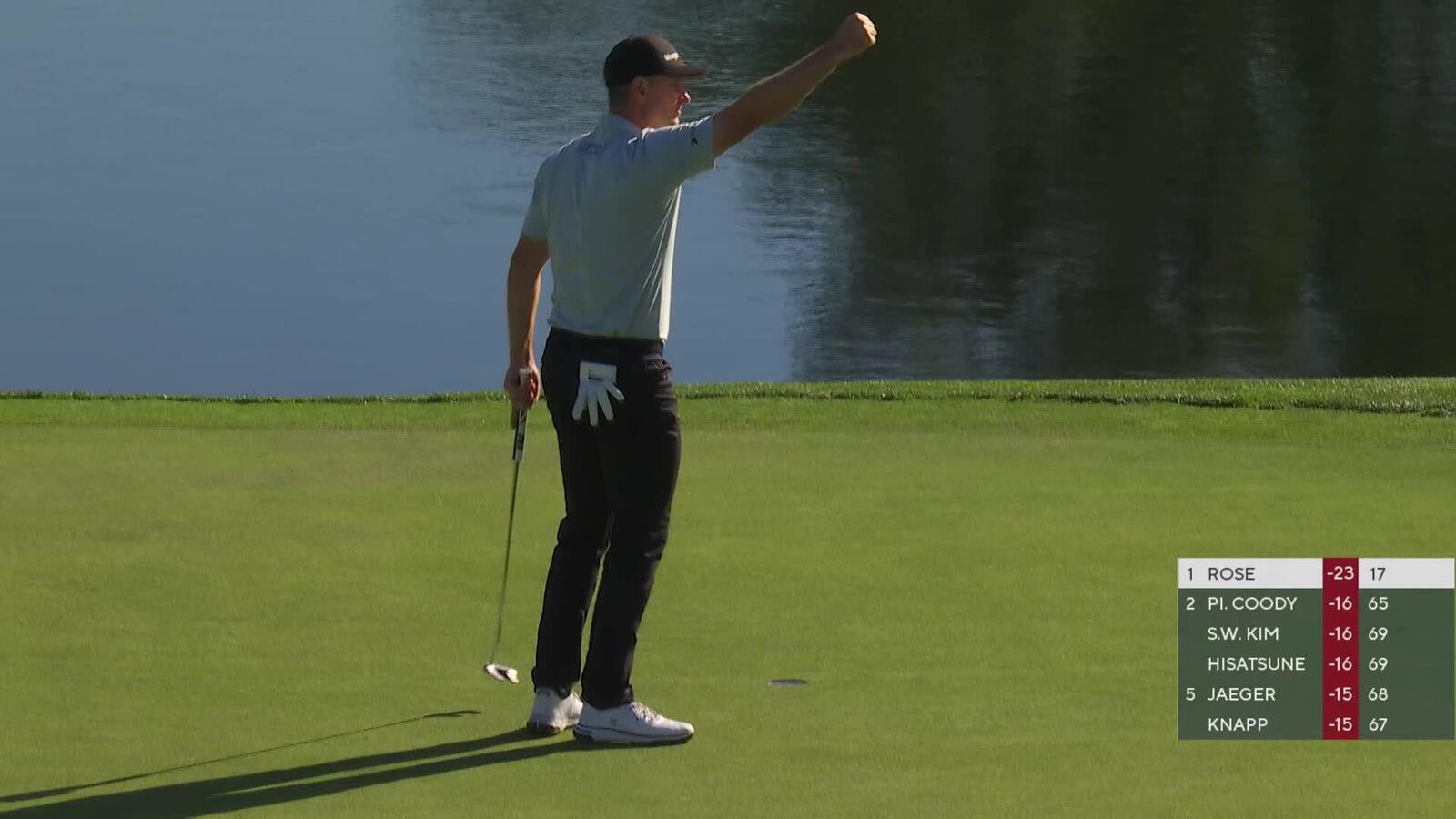
Justin Rose completes wire-to-wire win at Torrey Pines
The relentless pursuit of an edge isn’t good enough alone to sustain top play. Rose threatened to fade away like many of his era. Rose was outside the top 800 of the world at the start of 2023. He had missed the FexExCup Playoffs in three consecutive seasons and was without a top-three finish in two years. In the offseason, he parted ways with longtime swing coach Sean Foley and hired Mark Blackburn.
Blackburn and Rose assessed his swing, and instead of trying to better something he couldn’t do well, they embraced what he could. That meant reversing course from trying to get Rose’s hands higher in the backswing, which was difficult for Rose to do physically and had resulted in him getting too handsy. The result was creating a flatter, shorter swing to match his physicality. They also tweaked his setup to allow for more depth and the reliable tight draw he likes to play. That helped open the door for incremental speed gains, too.
It was a knowing tweak. Rose’s body could no longer get to certain positions. So they worked within the parameters Rose possessed, like a former ace pitcher who remains effective deep into his career. While he once won with high velocity and strikeouts, he’s adjusted to his new reality and found a new way to succeed through guile and precision. He’s painting the edges, working the count and manufacturing runs. Rose is the same. There’s a freedom that comes in unlocking and embracing that persona. There’s no desire to chase what’s not there, especially as he continues to prove to himself that what he possesses is still enough. Rose knows his swing and his game deeply. He has hit every shot at every course and has a clear mind of what to do.
“For someone who’s 45, he works like he’s 25,” Blackburn says. “You can compare him to any of the great athletes. He does all the right things consistently. Not some of the time. All of the time. I think he’s going to win more majors at 45.”
“He’s a very coachable person. He always seeks to understand,” Kenyon says. “He’s very much got like a mastery focus.”
At the same time, Rose is still looking for edges. That led him to McLaren Golf. Rose partnered with the Formula 1 powerhouse to help launch a new golf equipment line. Rose spent the last 18 months testing and refining the product, putting it in play for the first time at the Cadillac Championship. Two weeks is far from an adequate sample size, but Rose’s results were mixed. Critics view it as an unnecessary risk at an inopportune time. He did this once before, switching to Honma while he was No. 1 in the world. The relationship lasted only a year. So now, Rose is playing some of the best golf of his life again. Why make such a seismic shift? Choose to believe it or not, Rose and his team view it as an opportunity.
“Anyone who is pushing high performance, they’re always going to go to something they think is better,” Blackburn says. “He’s got different grinds, different soles, different grooves, all for different conditions … so I think he’s done it because he thinks it’s better. We’ve tested the product. The product is better.
“It’s not like anything is a guess with Rosey,” Blackburn adds.
There’s something admirable in that pursuit of better, even when you intimately know the downsides involved. It’s part of Rose’s goal to eek every last bit out of professional golf as possible. He believes he can compete in majors into his 50s, even if others have passively written him off. Among industry insiders, Rose was considered the favorite to captain the 2027 European Ryder Cup team, but those assumptions were based on the idea that Rose would have faded by now.
The day is coming when Rose can no longer compete. When? It’s hard to say. Rose believes he has another decade of chances to win The Open Championship, citing Tom Watson, Darren Clarke and Ernie Els as examples. His history at Augusta National is about as good as it can be without a green jacket in his closet. That affinity doesn’t just disappear. But that day is coming. Alcaraz and Sinner eventually overtook Djokovic. Randy Johnson got shelled at the end of his career – Eli Manning’s run as New York Giants quarterback ended with a whimper.
Rose is timeless, yes, but nobody is ageless.
On this particular Monday just outside Philadelphia, Rose was not at Aronimink like many of his peers, prepping for the PGA Championship. He was resting, readying himself for his third start in as many weeks. He will be at the course on Tuesday, excited for the week and another chance to fend off what comes for us all: time.


