



Brian Harman, Harris English recall the stress of playing PGA TOUR Q-School with cards on the line
5 Min Read
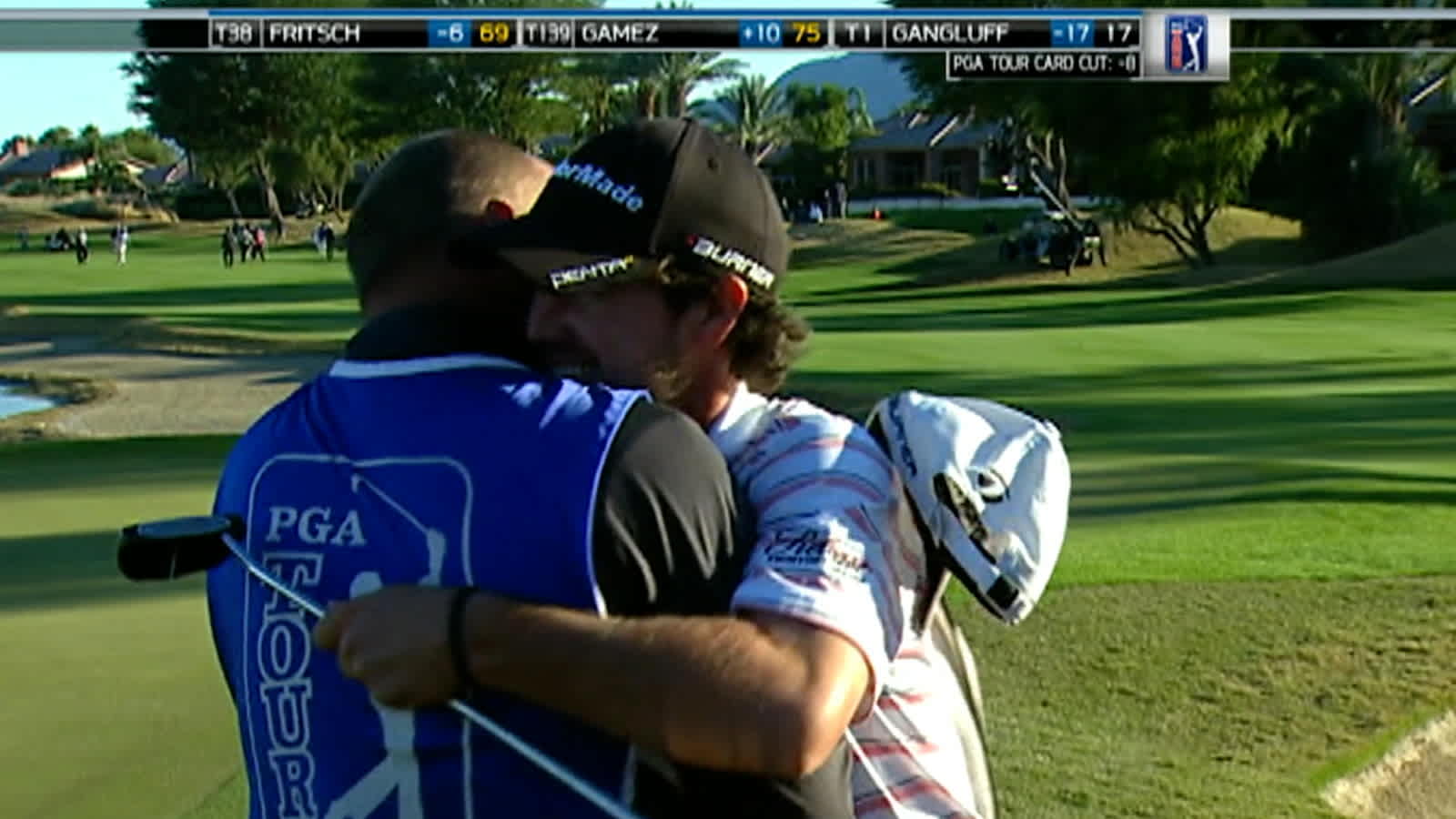
Brian Harman earns first Tour card at 2011 PGA Tour Q-School
Players in Article
Players in This Article
The anxiety before a final round comes from the immensity of the impending accomplishment and the singular definition of success.
Winning is a life-changing experience, but only one trophy is awarded.
PGA TOUR Q-School presented by Korn Ferry is different. There were 25 PGA TOUR cards available when Harris English competed in 2011. More than two dozen men would go home happy from PGA West in La Quinta, California, that year. But the increase in the number of prizes did nothing to diminish the stress, a testament to the height of the stakes.
English, months removed from his college days at the University of Georgia, was in the final group for the final round of that Q-School, much closer to the lead than to the cut line. And he’d already secured Korn Ferry Tour status for the following season by winning on that circuit earlier in the year. He had a safety net. Still, the anxiety was crippling.
“I couldn’t even swallow my breakfast because I was so nervous,” English recently told PGATOUR.COM. “I just needed to shoot 80 and I was in.
“I guess it was me being young and right out of college but I didn’t quite understand the magnitude of playing a … tournament for what the next year of your life looks like.”
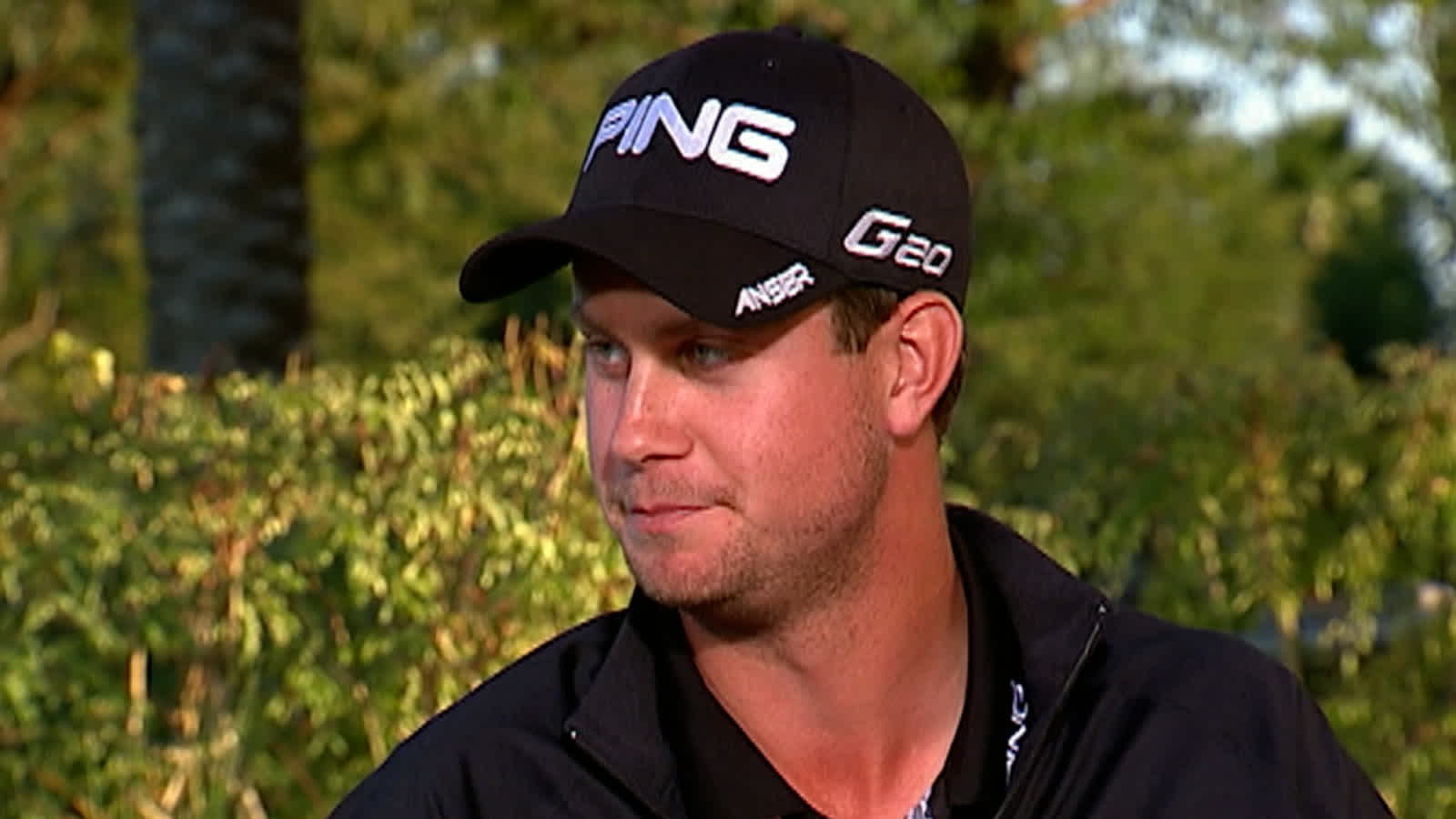
Harris English earns first Tour card at 2011 PGA Tour Q-School
PGA TOUR Q-School presented by Korn Ferry can launch a player directly from college, the mini-tours or the pro shop to the PGA TOUR if they play well at the right time. On the other hand, a sore back, poor night’s sleep or ill-timed triple bogey could keep a player off the TOUR, forcing him to wait another year for the opportunity to earn his card.
Fortunately, English only needed to play PGA TOUR Q-School presented by Korn Ferry once. He’s gone on to a successful TOUR career highlighted by four PGA TOUR victories and an appearance at the 2021 Ryder Cup.
After being gone for more than a decade, PGA TOUR cards are once again on offer at PGA TOUR Q-School presented by Korn Ferry. The top five and ties at week’s end will earn PGA TOUR status for the 2024 season.
The Korn Ferry Tour and Korn Ferry Tour Finals were the only source of PGA TOUR cards from 2013 to 2022. The pathway to the PGA TOUR was changed this year, however, with the Korn Ferry Tour offering 30 PGA TOUR cards and at least another five being awarded at PGA TOUR Q-School presented by Korn Ferry.
A decade without TOUR cards at PGA TOUR Q-School presented by Korn Ferry is why English is part of a rare breed. Only a handful of today’s top players endured Q-School when its stakes were highest and it had a reputation as arguably the most stressful week in the game.

Harris English during the final round of the 2011 PGA Tour Q-School at PGA West Golf Club in La Quinta, California. (Robert Laberge/Getty Images)
Most of the game’s current stars cut their teeth on the Korn Ferry Tour. The likes of Scottie Scheffler, Justin Thomas, Max Homa, Patrick Cantlay and Xander Schauffele spent a season on that circuit en route to the TOUR. Viktor Hovland aced his first crack at the Korn Ferry Tour Finals.
Others, like Rory McIlroy, Jordan Spieth, Collin Morikawa and Tom Kim earned their TOUR card by making the most of sponsor exemptions.
Brian Harman, Rickie Fowler and Si Woo Kim are the only other top-50 players in the world who earned their PGA TOUR cards from PGA TOUR Q-School presented by Korn Ferry.
Harman won his first major this year, made his Ryder Cup debut and enters 2024 as one of the highest-ranked players in the game. But even among that elite company, he stands out.
He’s the only top-20 player who earned his PGA TOUR card at Q-School.
Harman, 36, called Q-School “a nightmare” but also said “there's something really vulnerable and beautiful about” how much lives can change in that one week. Unlike English, who succeeded in his lone Q-School attempt, however, Harman has had the full spectrum of Q-School experiences.
Harman’s Q-School experiences were especially jarring considering the resume he had compiled before he even turned pro. He failed to advance out of Q-School’s First Stage in his first two attempts before earning his PGA TOUR card at the 2011 Q-School. He teared up as he thought about calling his mom, his “biggest supporter,” after tapping in and securing his PGA TOUR card.
Harman was a teen phenom before they became a regularity in this game. He made his first PGA TOUR cut when he was 17 and was the youngest American to compete in the Walker Cup. He was the world’s No. 1 amateur before arriving at the University of Georgia. Harman was a three-time All-American for the Bulldogs.
His first Q-School failure came after he spent an extra semester at Georgia to finish his degree in finance. “A victory lap,” he called it, leaving him unprepared to compete in one of the most stressful events of the year. He missed by seven. The second time, he missed by one after shooting 38 on his final nine holes. He made eight pars and a double bogey on the 14th to miss by the smallest margin.
“I’m driving home and it’s the Georgia-Florida weekend and Georgia loses … so I’m rock bottom, man. I am rock bottom,” Harman remembered recently. “But everything happens at a certain time for a certain reason. I’m sure of that. And I don’t think I would have been ready to have a sustained career if I had gotten out here earlier than I did.
After spending the intervening year on the mini-tours, touring the southeastern United States in his Ford F-150, staying in cheap motels and eating lots of Wendy’s, Harman made it to Q-School’s Final Stage in 2011. He was inspired to avoid a similar catastrophe this time.
“It made me work a lot harder,” he said.
On his 45th hole of the week, he hit his approach shot into the water and made a double bogey that dropped him outside the cutline for TOUR cards. He birdied seven of the next eight holes, however, and cruised to a T8 finish. He’s been on TOUR ever since and considers his Q-School experience an invaluable part of his long journey to becoming a major champion.
“Every golfer goes through these cycles of doubt,” he said, “… and just having the ability to pull yourself out of there and stick with it, it’s always worth it.”

