Outside the gates, a patron-less Masters has a muted impact
5 Min Read

A view of the locked gates at the entrance of Magnolia Lane off Washington Road that leads to the clubhouse of Augusta National. (Kevin C. Cox/Getty Images)
Outside the gates, a patron-less Masters has a muted impact
Outside the gates, a patron-less Masters has a muted impact
AUGUSTA, Ga. – Golf fans around the world know that it is Masters week. Outside the gates of Augusta National, it’s tougher to tell.
“It’s like the tournament doesn’t exist this year,” said Mark Cumins, the co-owner of Augusta’s T-Bonz steakhouse, a traditional Masters-week haunt for players, caddies and patrons alike.
Masters week in Augusta is quite simply the lifeblood of the community. Restaurants can make enough money in those eight days to survive the next 12 months. Hotels collect massive markups that can pay for necessary upkeep. Locals can rent their houses to pay for vacations or even college education.
But this time around, the impact in town is negligible.
Washington Road, the main thoroughfare to the Augusta National Golf Club, is jammed during most Masters. The traffic rivals anything Los Angeles or New York has to offer. Not this year.
There was no John Daly selling merchandise from his RV in the Hooters parking lot. No people asking for tickets. No crowds at all. It was clear sailing from Washington Road into Augusta National this year.
Media, players and their families, medical staff and the like have still come to town for this week. But it’s barely a blip on the radar compared to normal.
Cumins counts himself fortunate that T-Bonz doesn’t rely on Masters week for survival.
“Some others in town certainly do bank on (Masters week). In terms of what usually goes on outside of the golf club, it’s just not happening,” said Cumins, who owns two dozen other restaurants, as well. “We are busy 52 weeks of the year but Masters week is usually something else entirely. Last year, in this restaurant alone I bought and cut 6,000 pounds of beef in eight days during the Masters. We don’t get near that on other weeks.”
The hit has been substantial for others. For Amanda, a waitress at a nearby restaurant, Masters week means extra shifts, big tips, and the cash infusion she banks on to help pay off student debt and any other necessities.
“I’m run off my feet and don’t have time to breathe in Masters week but the flipside is it brings savings I can always really use,” she said. “And everyone is always in a good mood, looking to have a nice time, and usually feeling somewhat generous.
“Lately, we’ve been dealing with COVID shutdowns and furloughs and only recently have been back up working and not at full capacity. A Masters week would have really been great about now. Instead we will keep fighting on until patrons return.”
Cumins points out that the impact is felt throughout the community. Many teachers use the week, which is spring break for local schools, to earn extra money working in hospitality. School this week, whether virtual or in person, is on.
The impact extends to the golf course, as well. No patrons means no roars. And that is perhaps the most jarring loss of all.
“It echoes there. It travels. It's unlike any place in the world,” Tiger Woods said recently of the noise.
That it does. The Masters does not have electronic scoreboards, but players don’t really need them. They can sense when players are making moves. The roars reverberate around the property. You want to know where the leaders are? Just listen.
“When people start making birdies and eagles and things are happening, it's electric. And you can feel the difference in each roar,” Jon Rahm says. “You know if it's a Tiger roar or a somebody else roar. You know what's going on.”
That dynamic won’t be here this time around.
“Hopefully it doesn't affect anybody's performance,” Rahm adds.
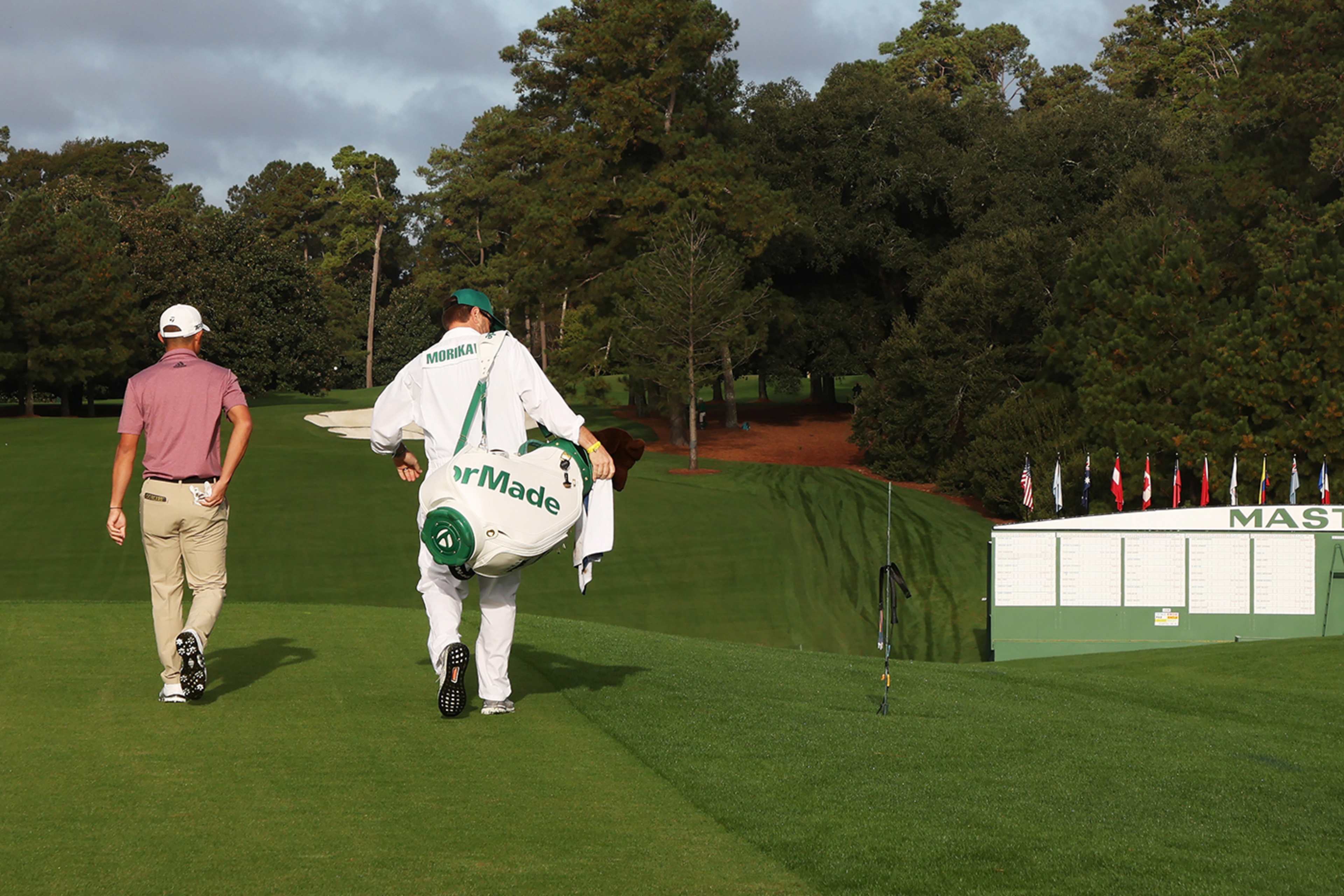
Augusta National is usually framed by a large swath of patrons lining each hole. This year, there are no ropes. No grandstands. No seats. No patrons.
From the iconic scoreboard halfway down the first hole you could see for miles down to the second and seventh greens, and the eighth fairway. The 17th hole was visible through a few trees, and if you looked hard enough as you walked that way the 15th and 16th holes came in view. Impossible normally.
“If you stand on 15 fairway, usually you can pretty much just see 15 green and maybe 16 green. Now you can actually see 17 tee, 16 tee box, the whole slope, people walking down from 6 and even see through almost to 4,” Rahm said Tuesday.
“It's a little bit different. There's actually land in between 15 green and 16 tee, which usually doesn't even look that way because there's a big old grandstand. Same with other holes. It's weird to see 14 without anything on the back. You see through to 10 and almost 11.
“This year will be unique because you can maybe take advantage of where the patrons usually are at, like 13, you have a layup, you can go as far right as you want now and almost 14 tee and have a different angle. Same on 2, you can move the ball around a little bit more.”
Even though Augusta National is familiar, it was easy to get lost during a walk this week. Without the flow of people and the ropes, one could almost accidentally walk onto a tee box or into a fairway or two.
In place of ropes are painted green lines to advise the lucky few inside where to stay back from. But consider this. On Monday, Tiger Woods played the back nine in practice with Bryson DeChambeau, Justin Thomas and Fred Couples. On the 12th tee, we were close enough, with no more than 15 people or so watching, to almost reach out and touch Woods. An endless sea of front row seats at a place seen by some as golf mecca.
On recounting this story later on one man, who will remain anonymous, said he would have paid $1 million for that privilege. He could afford that, so it was no throwaway line. Whispers around Augusta tell stories of some individuals looking into buying companies who have access to the grounds just to be part of what will be a very unique Masters indeed.
Well, we hope unique. Locals, and most everyone else, hopes by April next year things might be somewhat back to normal. Cumins knows there is no certainty of that but is optimistic that at least in limited quantities some patrons will be back by then.
“Not many people hope for bad traffic. But in April I hope it’s jammed,” Cumins said with a smile.