Work out like Cameron Smith
5 Min Read


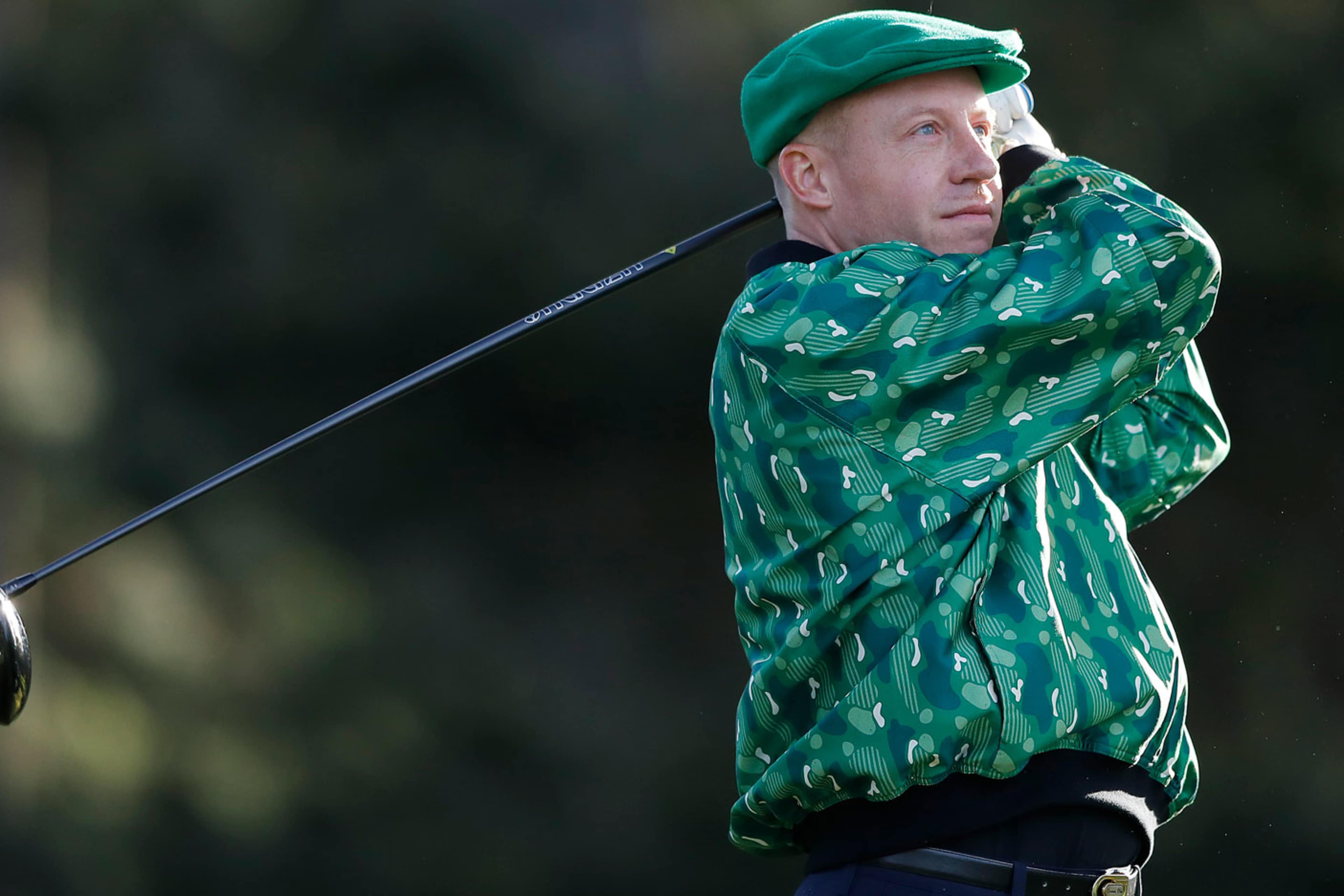
Cameron Smith putting instructional at Sony Open
About the Author: Nick is a strength and conditioning coach contracted by PGA TOUR Players and national teams to deliver his unique brand of golf fitness services.
Cam Smith, 2 x PGA TOUR winner and 2nd in 2020 Masters, has made a lot of progress from when we first started working together - from a scrawny teen into a well rounded golf athlete. At age 16 he was weak, tight, had some alarming postural adaptations from golf and was in consistent pain and discomfort in a number of areas.
Over the past 10 years, we have systematically addressed the various physical issues, and learned to manage the persistent limitations. Cam is now at a point where he can comfortably maintain strength and power levels that enable him to punch above his weight and size both in the gym and in driving distance on TOUR.
I would like to share with you what I consider to be the 5 areas that the competitive club golfer can learn from Cam’s approach to physical preparation. If implemented properly these will not only help your golf but benefit your long-term musculo-skeletal health too.
Cam’s approach is particularly relatable and applicable to the club golfer because he isn’t the biggest guy, or the most gifted athlete, or even the hardest worker. Cam likes to keep things simple and use practice and training approaches that can be completed in a short amount of time with the minimum of fuss (leaving more time for messing around on the range apparently!).
1. STICK TO THE PLAN
Cam doesn’t wander from the prescribed plan; this is for three main reasons. Firstly he wants to avoid the excessive post exercise soreness that prohibits him from practicing and performing effectively. Sticking to familiar exercises and loads helps ensure this. Secondly, performing the same exercises allows him time to get familiar and comfortable with the technique, ensuring absolute best form and resultant outcome. Lastly, golf is a tough mental sport especially at the very elite level. Being able to go into the gym and carry out a familiar routine means that there is no excess mental energy being used up unnecessarily.
How you can apply this – find a good training program and stick to it. Only change up exercises when performance isn’t a priority (e.g. off season).
2. WARM UP CONSISTENTLY
Cam recognizes the importance of warming up properly to not only prevent injury, but also help ensure he is moving correctly. His 15-minute routine of self-massage, stretch and posture setting is quite literally a daily habit. Pre tournament rounds, it’s also a great time to get his head in the right place and start mentally preparing for the upcoming challenge.
How you can apply this – Get yourself some basic warm up equipment, identify the key areas to release stretch activate and allocate 15 minutes before you play to go through the routine.
3. TRAIN FOR SPECIFIC POWER
The keys to hitting the ball a long way are widely considered to be combination of vertical thrust and rotational speed. Since 2015 we have focused specifically on training these areas through jump variations along with rotating against resistance. The jump variations progress from small drop jumps to squat jumps with 30kg to trap bar jumps with as much as 60kg. The rotational speed approach doesn’t change much, normally working with a strong resistance band or med ball that challenges Cam to try to move at around the same speed he swings driver. This contributed to Cam placing third on TOUR for distance gained from 2016 to the 2017 season and regularly ranking inside the top 75 on TOUR.
We use an accelerometer to quantify progress and drive intent by measuring speed, jump height and power output. If you are tech minded and like your training easily quantified then check out the Push Band by Train With Push.
How you can apply this – incorporate basic jump movements into your gym sessions along with some fast rotational work using med ball throws or against resistance bands. Just remember to work on your landing mechanics (land soft) to minimize the risk of injury and work up slowly to top speeds for the rotations.
4. TRAIN YOUR WHOLE CORE
Many people think that the core is just another word for our abs, when in fact leading experts such as Dr Stuart McGill believe that the core is composed of the lumbar spine, the muscles of the abdominal wall, the back extensors, and quadratus lumborum - essentially every muscle and body structure from our ribs to our pelvis.
In a golf context, there is a common myth that the core muscles are our main source of power in the swing. In reality, the main role of the core is to provide stiffness and a stable support for force/power transfer from our legs to our upper body.
If we can create stiffness and stability in our core, we can help protect our spine and surrounding structures from unnecessary strain whilst also improving swing efficiency - pretty sweet combo!
When you consider the structure and function of the core, a 3 dimensional approach to training the core becomes essential and Cam has fully embraced this approach with exercises such as the Simultaneous Press and Row and GHD Hip, Extensions demonstrated in the video below.
How you can apply this – start training your core in 3D with exercises that challenge your anterior (front), lateral (side) and posterior (back) core muscles.
5. KNOW WHEN TO REST
The physical, mental and emotional demands of a tournament week make it tricky to continue to train with the same volume and intensity as usual. This makes it the ideal time to reduce the intensity and volume of gym work, focusing on posture, speed and mobility. I will often prescribe a watered down version of the usual program, reducing reps and sets whilst keeping the load high and focusing on great technique.
How you can apply this – moderate your training load to suit your performance needs. Try doing the heavy stuff earlier in the week, leaving you fresher for the weekend.
My recommendations might seem pretty simple, and with good reason; golf is a complex, frustrating and often confusing game. I believe that golfer’s training should be straight forward, easy to implement and repeatable. In this un-predictable sport, some consistency around physical preparation can go a long way to minimizing variability in performance.