


Player’s Take: Sudarshan Yellamaraju
7 Min Read

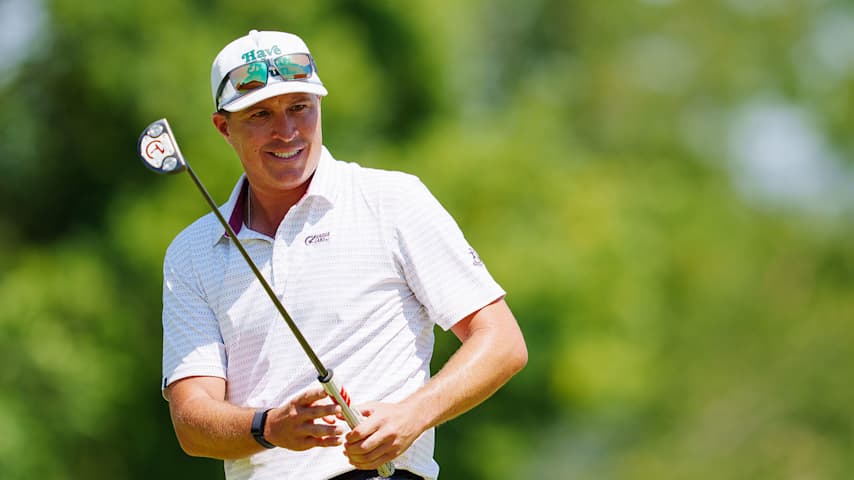
Sudarshan Yellamaraju, a native of India, grew up during his elementary school years in Winnipeg and will return to his childhood home next week for the CentrePort Canada Rail Park Manitoba Open. After beginning the season with conditional status, forcing him to go the Monday-qualifier route, Yellamaraju broke through last week with his first top-10 in his rookie PGA TOUR Canada season. Yellamaraju posted four par-or-better rounds, including a final-round 67, to finish sixth. At No. 121 in the Fortinet Cup standings when the week began, Yellamaraju climbed 75 positions, into his current 46th position. Yellamaraju is still looking for his first pro win to go with his unlikely 2016 Ontario Amateur victory when, at age 16 and the youngest player in the field, he made a birdie putt on the 72nd hole to avoid a playoff and defeat Gajan Sivabalasingham by a shot. Now in his second year as a professional, Yellamaraju remembers his early days swinging a plastic club, trying to find a lefthanded set and how he came to skip college and turn pro.
I live in the Toronto area, Mississauga to be exact. I am originally from India and moved to Canada when I was four. My family settled in Winnipeg. I lived there until I was 11. My entire elementary school years were in Winnipeg, plus a little bit of middle school.
It was in Winnipeg where I started to play golf. I’m definitely very restless and was that way as a child. I was always wanting to move around, to be active. I was nine when I was starting to take off competitively with golf.
My dad used to watch golf on TV as a way to relax. He liked watching and listening to the commentators on the European Tour; obviously now it’s called the DP World Tour. Like I said, I was a very restless child. And every time I watched golf, I would be just so zoned in and intrigued with the sport itself.
My mom actually asked my dad to buy me a plastic set of golf clubs. I loved them, and I was hitting a ball around the house and outside all the time. Then I started actually hitting with real golf clubs that weren’t even mine. They were just rental clubs that didn’t really fit me at all. They were definitely longer, so I had to choke down on them. I always took the smallest clubs, and even then they were still a little big for me.
During the winter, I would hit balls as a little boy in a golf dome because, obviously, in Winnipeg, you can’t play year-round. I don’t exactly remember the first time I really flushed a shot. I do remember just enjoying hitting a lot of shots.
We still have videos of me hitting on the range and sometimes on the course. It shows how I didn’t want to stop, wanting to keep hitting and hitting and hitting as much as I could. I actually had to learn how to slow things down. When I started playing golf, I was constantly hitting without really too much idea of what it was I was doing. But, yeah, I think I was more worried about hitting than anything else.
I eventually got my own set (of clubs) when I was probably seven or eight. It was a Nike Tiger Woods set, and they were a fit for me. Maybe they weren’t professionally fit, but they were the right size. That was the main thing.
It was very hard to find at least a junior set for a lefthander, and eventually we actually had to order clubs from the U.S. because there were more available there.
While I play golf lefthanded, I write righthanded, I eat righthanded. I guess I’m a mix of everything because I throw a ball with my left hand, and I kick with my left foot.
I think I really thought about having the ability to turn pro when I was 17 or 18. That’s when I had my first big achievement, winning the Ontario Amateur when I was 16. I became the youngest person to win the Ontario Am. That win gave me a lot of confidence and the idea that I could really compete at a higher level.
Throughout my junior career, I was thinking of going to college. I got offers from schools, but they weren’t good enough for me to actually go. I was getting a bunch of 50-percent scholarships and some smaller schools were offering me. I was trying to paint what I wanted to do in the future, and I wanted to be a professional golfer. I thought, I might as well pursue it right now when I’m—and I know it sounds kind of crazy—20 years old. I didn’t want to lose time, so I thought I might as well turn pro right away.
I didn’t want to turn pro right at 18. I was intending to turn pro in 2020. But then COVID happened. So, I eventually waited until 2021. But in those years leading up to when I turned professional, I was slowly trying to get prepared to and try to keep improving my game so I could at least compete at a professional level first.
I’m looking forward to next week’s tournament in Winnipeg. We have a couple of friends from there. But maybe my dad keeps in contact with them. I personally don’t.
I’ve never played [Southwood Golf and Country Club]. Since it was a private course, I never got the chance. I always knew it was a very nice course, in good shape. For me and next week, I think, OK, this is going to be a nice treat for me.
Right now, I’m just trying to take each week as it comes in. I haven’t played all the (PGA TOUR Canada) events. That was part of my first focus on being able to play the rest of the events, and now that I’m able to, and I’m in a decent spot (in the Fortinet Cup standings), now it’s the same thing—to play steady and see if I can keep improving.
I’ve done numerous Monday qualifiers before on various tours. And I know they’re tough because you have one day, 18 holes, and your game has to be sharp. Going into Monday qualifiers, it’s not what ideally you what you want to do. But sometimes that's what you have to do if you're not in a position like others where you're getting into the events right away.
Despite being from India, my native language isn’t the best. I do speak a little bit, but I’m nowhere fluent like my parents. As a child, I used to know a lot more. But, actually, even back in India, I used to go to an international school. So, all the teaching was in English, primarily. That’s when I started to lose the language. I understand most of what [my parents] say. They obviously try to keep it simple. When they’re talking to me, it’s pretty much OK.
Just the fact that our people are so supportive of each other and trying to always encourage us is why I really love my heritage. In general, we always try to make sure we work hard and we’re putting our full effort into doing everything. And I really love our food. I don’t even know no other food that I’ve had that can even compare to [Indian] food.
My parents have been there pretty much my entire life. They’ve been pushing me for sure to try to keep getting better. They make sure I work hard and don’t slack. Without them, I definitely wouldn’t be where I am. I know I’ve done a lot myself, but without their help I definitely wouldn't be where I am right now.
It’s funny. I do not play either of the “national” sports from my two countries, India and Canada. I understand both cricket and hockey, but I don’t play. I don’t even know how to skate, which is quite crazy, especially since I’m Canadian and I think most people believe every person in Canada should know how to skate.